

Paromita Das
GG News Bureau
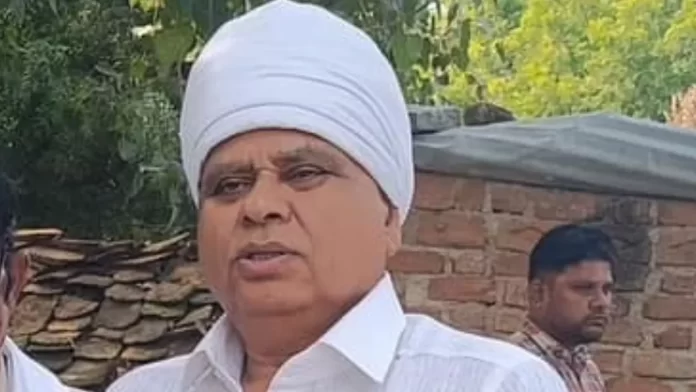
New Delhi, 25th November. The debate over Bharat’s identity as a secular state or a potential “Hindu nation” has reemerged, fueled by Congress leader Phool Singh Baraiya’s strong critique of Bageshwar Dham’s Peethadheeshwar Dhirendra Krishna Shastri and his ongoing padayatra. This event, known as the “Hindu Ekta Yatra,” has drawn massive participation from Bharat and abroad, including political figures from both the ruling BJP and opposition parties. Baraiya’s comments have sparked a nationwide conversation on secularism, religion, and governance.
Understanding Baraiya’s Controversial Remarks
Phool Singh Baraiya, a Congress MLA from Bhander city in Madhya Pradesh, has accused Bageshwar Baba of “hooliganism” and aligning his efforts with Prime Minister Narendra Modi’s political agenda. Baraiya asserts that such movements aim to keep citizens “in the dark” and “fools,” facilitating Modi’s prolonged dominance in power.
Baraiya’s most striking statement, however, challenges the very notion of Hindu identity in Bharat. He sarcastically questions the authenticity of Hinduism, referencing societal evils like caste-based discrimination, gender-based violence, and social exclusion, all committed in the name of Hindu tradition. This pointed criticism invites reflection on the diversity and complexity within the Hindu identity itself.
The Padayatra and Its Symbolism
Bageshwar Baba’s Hindu Ekta Yatra is not merely a religious procession but a powerful statement advocating for Hindu nationalism. For years, Shastri has championed the declaration of Bharat as a Hindu nation and has appealed for an end to casteism, an issue deeply ingrained in Bharatiya society. His padyatra has attracted thousands of participants from within Bharat and the Bharatiya diaspora, emphasizing unity among Hindus.
Supporters argue that the movement seeks to revive Hindu pride and address social divisions. Critics, however, view it as a political maneuver veiled in religious fervor, pointing to the presence of political leaders from the BJP and even the Congress among the marchers.
Bharat’s Secular Identity: A Historical Perspective
Bharat’s secularism, as enshrined in the Constitution, is rooted in inclusivity and equal respect for all religions. The founders of modern Bharat envisioned a pluralistic society that would thrive on diversity. Declaring Bharat a Hindu nation would challenge this foundational principle and potentially alienate significant portions of the population, including minorities and marginalized communities.
Baraiya’s remarks, although controversial, reflect fears that Hindu nationalism might erode the secular fabric of the country. His assertion that there are “no Hindus in Bharat” highlights contradictions within the community and underscores the need for introspection rather than exclusivity.
Analyzing the Role of Political Leaders
Baraiya’s statements also raise questions about political motives. While he critiques BJP leaders for aligning with religious movements, Congress figures like Jaivardhan Singh have also participated in the padayatra. This duality reflects the political tightrope that leaders walk in a country where religion often influences public sentiment.
The presence of politicians across party lines in such events indicates that religion remains a potent force in Bharatiya politics. This dynamic complicates efforts to maintain secular governance and suggests that both major political parties recognize the electoral importance of religious identity.
Global Attention on the Yatra
The Hindu Ekta Yatra has garnered international attention, with participants from countries like Nepal, Mauritius, Britain, and Saudi Arabia. This global reach underscores the resonance of Hindu nationalism among the Bharatiya diaspora, who often see themselves as cultural ambassadors of their heritage.
However, the international participation also brings scrutiny. Critics argue that projecting Bharat as a Hindu nation might damage its global image as a multicultural democracy. It could strain relations with countries that value secularism or have significant Muslim populations.
The Dangers of Religious Exclusivity
Bharat’s strength lies in its diversity. Declaring it a Hindu nation risks alienating religious minorities and deepening existing divisions within Hinduism itself. Movements like Bageshwar Baba’s padayatra may inspire unity among some but can equally polarize others, undermining the inclusive vision of Bharat’s founders.
Baraiya’s criticism, while provocative, draws attention to a critical debate: Can Bharat reconcile its religious heritage with its commitment to secularism? His remarks serve as a reminder that religion, when intertwined with politics, can become a divisive tool rather than a unifying force.
Conclusion
Bharat stands at a crossroads, grappling with its identity as a secular state or a nation defined by one religion. While movements like the Hindu Ekta Yatra resonate with many, they also raise questions about inclusivity and governance. Leaders like Phool Singh Baraiya may use sharp rhetoric, but their critiques highlight genuine concerns about the implications of Hindu nationalism.
To safeguard its pluralistic ethos, Bharat must ensure that religion remains a matter of personal faith rather than a political agenda. Only by embracing its diversity can the nation truly thrive as a beacon of unity in a fractured world.
The post ‘No Hindus in India’: Congress MLA Baraiya’s Bold Statement Shakes the Nation appeared first on Global Governance News- Asia's First Bilingual News portal for Global News and Updates.