

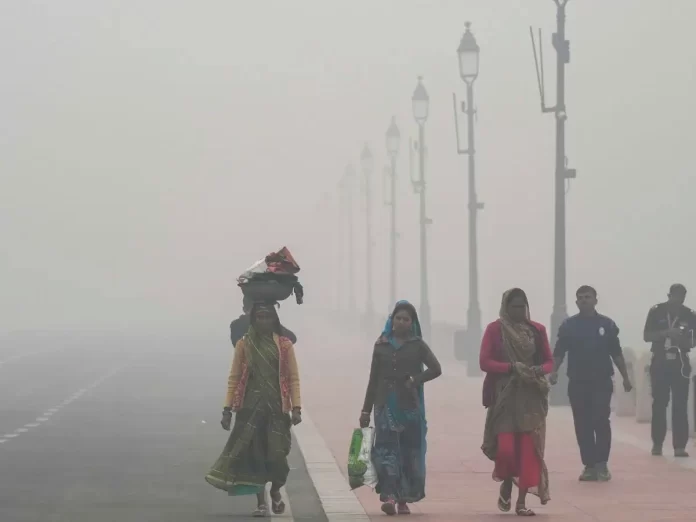
GG News Bureau
New Delhi, 30th Nov. In a response to the Lok Sabha on Friday, Union Minister of State for Health, Prataprao Jadhav, acknowledged air pollution as one of the aggravating factors for respiratory diseases but clarified that no conclusive data exists to establish a direct correlation between air pollution and diseases exclusively caused by it.
In a written reply, Jadhav emphasized that the health effects of air pollution are influenced by a range of factors, including food habits, occupational habits, socioeconomic status, medical history, immunity, and heredity, among others. He explained that while air pollution exacerbates respiratory ailments and related diseases, it cannot be solely blamed for causing them.
The Health Ministry, according to Jadhav, provides technical and financial support to states and Union Territories (UTs) through the National Health Mission (NHM) to strengthen public healthcare systems. This includes support for the implementation of the National Programme on Climate Change and Human Health (NPCCHH), which raises awareness among vulnerable communities about the impacts of climate change, including air pollution, on health.
Jadhav outlined several steps the government has taken to address air pollution, including the implementation of the NPCCHH, which has been active since 2019. The program focuses on capacity-building, preparedness, response activities, and partnerships related to climate-sensitive health issues. Additionally, the NPCCHH has developed State Action Plans for Climate Change and Human Health, which include air pollution-specific interventions aimed at reducing its impact.
The Ministry has also issued public health advisories on mitigating the effects of air pollution and organizes nationwide awareness campaigns in coordination with state authorities for World Environment Day, the International Day of Clean Air for Blue Skies, and National Pollution Control Day.
Further measures include dedicated training for medical professionals, frontline workers, and vulnerable groups such as women, children, and those working in occupations exposed to high pollution levels. The government also disseminates air quality forecasts and early warnings to prepare health sectors and communities for potential air pollution hazards.
In addition to these initiatives, the government’s flagship schemes such as the Pradhan Mantri Ujjwala Yojana (PMUY) and the Swachh Bharat Mission are aimed at improving health outcomes, particularly by providing clean cooking fuels and improving sanitation, including air quality through the Swachh Hawa initiative.
To further tackle air pollution, the Ministry of Environment, Forest and Climate Change launched the National Clean Air Programme (NCAP) in 2019, a national-level strategy aimed at reducing air pollution across the country.
The post ‘No Direct Link Between Air Pollution and Respiratory Diseases’, says MoS Health appeared first on Global Governance News- Asia's First Bilingual News portal for Global News and Updates.