

Paromita Das
GG News Bureau
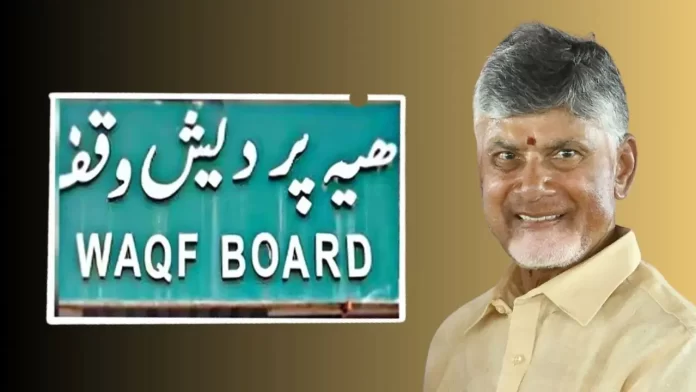
New Delhi, 3rd December- In a significant political and administrative development, the Chandrababu Naidu-led coalition government in Andhra Pradesh has dissolved the State Waqf Board constituted by the previous YSR Congress Party government. The move follows legal challenges and prolonged non-functioning of the Board, raising questions about governance, minority welfare, and political strategy.
The decision to dissolve the Waqf Board stems from a complex interplay of legal and administrative challenges. The previous YSR Congress government had constituted the 11-member Waqf Board in 2022, acting in compliance with a High Court order. However, the process came under scrutiny, with allegations of irregularities in the nominations and elections of Board members.
The Andhra Pradesh High Court, responding to petitions challenging the legitimacy of the Board’s constitution, issued a stay order on November 1, 2023, halting the election of its chairperson. This legal impasse created an administrative vacuum, leaving the Board unable to perform its critical functions. Recognizing the inefficiency and in light of ongoing litigation, the current government deemed it necessary to dissolve the Board and revoke the related government order (G.O. Ms. No. 47).
The Coalition Government’s Justification
The Minorities Welfare Department, led by Secretary Kati Harshvardhan, justified the dissolution as a necessary step to ensure good governance, protect Waqf properties, and resolve legal uncertainties. The government framed its action as a move to eliminate administrative stagnation and to pave the way for a fresh, functional Board. Minister for Minority Welfare N. Md. Farooq emphasized the government’s commitment to the welfare of minorities and assured that the dissolution was a means to streamline the Board’s operations.
The appointment of TDP leader Shaik Abdul Aziz as chairman of the new Waqf Board is likely a step toward addressing this administrative vacuum. A seasoned politician and a former Mayor of Nellore, Abdul Aziz’s leadership is expected to bring a measure of stability and efficiency to the Board’s functioning.
The Political Implications
The dissolution of the Waqf Board has significant political undertones. By revoking the decisions of the previous YSR Congress government, the Chandrababu Naidu-led coalition signals a shift in the management of minority welfare institutions. While the move is framed as a response to legal and administrative concerns, it also positions the coalition government as proactive and resolute in addressing governance issues.
The appointment of Abdul Aziz as chairman reflects the coalition government’s strategy to strengthen its political foothold among minorities. As a prominent TDP leader, Abdul Aziz’s appointment could enhance the party’s credibility and influence within minority communities, particularly in constituencies with significant Muslim populations.
However, this move is not without its risks. The dissolution of the Board may be perceived by some as politically motivated, potentially alienating sections of the electorate aligned with the YSR Congress or other minority groups critical of the decision.
Governance Challenges and the Role of the Waqf Board
The Waqf Board plays a crucial role in managing Waqf properties, which are religious endowments meant for charitable and religious purposes. Efficient functioning of the Board is essential for protecting these properties from encroachments, ensuring their proper use, and addressing the welfare needs of minority communities.
The prolonged non-functioning of the Board under the previous government and the subsequent legal challenges highlight systemic issues in its governance. The Chandrababu Naidu-led government’s decision to dissolve the Board underscores the need for reforms in how such institutions are constituted and managed.
The coalition government’s emphasis on protecting Waqf properties and ensuring their proper utilization is commendable. However, it must translate these commitments into tangible outcomes by implementing robust oversight mechanisms, promoting transparency, and fostering community trust in the Board’s operations.
Balancing Political Strategy with Minority Welfare
The dissolution of the Waqf Board and the subsequent steps to reconstitute it reflect the intersection of political strategy and governance. For the Chandrababu Naidu-led coalition, this move is an opportunity to demonstrate its commitment to minority welfare and effective administration. However, the government must tread carefully to avoid perceptions of partisanship or insensitivity toward the concerns of minority communities.
Effective communication, community engagement, and inclusive decision-making will be key to ensuring that the reconstituted Waqf Board fulfills its mandate without succumbing to political or bureaucratic pressures.
Conclusion: A Moment of Reckoning for Minority Governance
The dissolution of the Andhra Pradesh State Waqf Board marks a turning point in the state’s approach to minority governance. While the Chandrababu Naidu-led coalition government has justified its actions on legal and administrative grounds, the move also serves as a statement of its priorities and political vision.
As the state prepares for a reconstituted Waqf Board under Abdul Aziz’s leadership, the government faces the dual challenge of addressing governance inefficiencies and rebuilding trust among minority communities. Success will depend on its ability to ensure transparency, accountability, and inclusivity in managing Waqf properties and addressing the broader needs of minorities.
In the evolving political landscape of Andhra Pradesh, the effectiveness of these measures will determine whether the coalition government can consolidate its position as a champion of minority welfare or face criticism for perceived political opportunism.
The post The Dissolution of Andhra Pradesh’s Waqf Board: A Political and Governance Perspective appeared first on Global Governance News- Asia's First Bilingual News portal for Global News and Updates.