

GG News Bureau
New Delhi, 4th Dec. The recent discussions surrounding the number of madrasas in Kerala, fueled by social media debates, have sparked considerable public interest. Former MLA Prof. A. V. Thamarakshan, in his open letter, raises questions about the substantial financial implications of madrasa education in the state. His claims prompt an examination of the numbers and the wider impact of this issue on Kerala’s secular fabric.
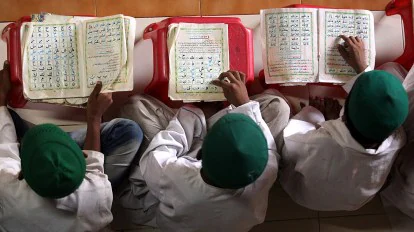
Kerala’s population stands at approximately 3.57 crore, with Muslims making up 26% of it, totaling around 88.7 lakh individuals. According to available data, the state is home to 21,683 madrasas, with an average of 23 madrasas per Panchayat. With 2,04,683 madrasa teachers spread across these institutions, the financial strain on the state’s resources becomes apparent.
The reported monthly expenditure on madrasa salaries alone is ₹511.7 crore. Additionally, the state’s pension scheme for madrasa teachers, implemented by the Pinarayi Vijayan-led government, further adds ₹120 crore to this total. Combined, the salary and pension payments total approximately ₹631.7 crore each month, or ₹7,580 crore annually.
Thamarakshan’s concern centers on whether such significant spending, funded by taxes from Hindus, Christians, and Muslims alike, is justifiable. The letter questions whether this allocation of public funds reflects the secular principles Kerala is known for, or if it instead nurtures a community-specific expenditure system that might be perceived as favoring one group over others.
By highlighting the sizable financial figures, Thamarakshan invites the public to reconsider what “secularism” truly means in the state. His conclusion—that Kerala is not a secular state but one driven by community-specific religious priorities—has ignited a broader conversation about how resources are distributed and whether this approach is sustainable and fair to all citizens, regardless of their faith.
The debate surrounding the role and financing of madrasas in Kerala is a reflection of larger discussions on secularism, resource allocation, and the state’s duty to ensure that taxpayer money is used equitably across all communities. While Kerala has long been seen as a model for its progressive social policies, questions like these challenge the notion of true secularism and demand a deeper examination of how the state balances religious education with the broader public good.
This analysis calls for a careful evaluation of state policies, especially in light of such significant financial commitments, to ensure that the resources used are fair and contribute positively to Kerala’s future growth and unity.
The post Kerala’s Madrasa Funding: A Closer Look at Secularism and Public Expenditure appeared first on Global Governance News- Asia's First Bilingual News portal for Global News and Updates.