

Paromita Das
GG News Bureau
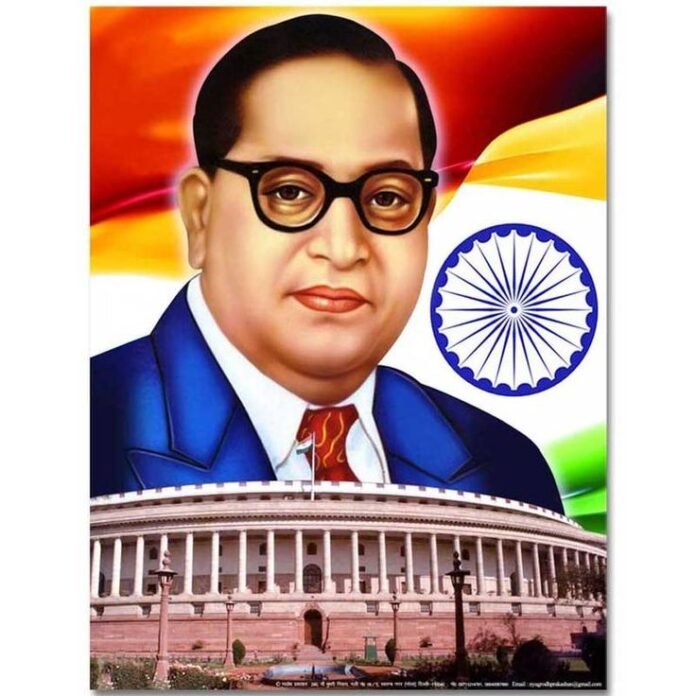
New Delhi, 21st Dec. The recent uproar over a manipulated video clip of Home Minister Amit Shah, purportedly insulting Dr. B.R. Ambedkar, has once again brought the late Dalit icon into the center of India’s political maelstrom. In the ever-polarized environment of Indian politics, Ambedkar’s legacy has been weaponized by rival camps to either assert ideological supremacy or expose alleged hypocrisy. While the BJP has tried to appropriate Ambedkar into its Hindutva fold, the Congress has leveraged his image to project itself as the defender of social justice. The debate, however, runs deeper than party lines, exposing layers of historical, ideological, and political contradictions.
The Context: A Video and a Political Storm
The controversy began with a 10-second clip of Shah, taken out of context, sparking accusations that he insulted Ambedkar. Congress seized the opportunity, with Rahul Gandhi amplifying the narrative to attack the BJP’s supposed anti-Dalit stance. The BJP, in turn, countered with historical records that show Congress’s longstanding hostility toward Ambedkar, particularly during the Nehru era. The debate has since spiraled into a broader examination of Ambedkar’s position vis-à-vis Hindutva, caste politics, and his nuanced critique of Hinduism.
Congress’s Contradictions
Congress’s newfound veneration for Ambedkar is riddled with historical contradictions. During Ambedkar’s lifetime, the party actively marginalized him. Jawaharlal Nehru’s private letters reveal his contempt for Ambedkar, and Congress stalwarts worked to defeat him in elections, both in 1952 and 1954. Even after Ambedkar’s passing, Congress delayed recognizing his contributions, with the Bharat Ratna being awarded to him only in 1990 under a non-Congress government.
Now, however, Congress positions itself as Ambedkar’s natural heir, branding the BJP as anti-Dalit and accusing it of perpetuating caste inequalities. Rahul Gandhi’s use of Manusmriti as a rhetorical tool in Parliament further illustrates the party’s strategy to frame the BJP as regressive, despite Congress’s own troubled past with caste dynamics.
BJP’s Dilemma: Reconciling Ambedkar with Hindutva
For the BJP and its ideological fountainhead, the Rashtriya Swayamsevak Sangh (RSS), the incorporation of Ambedkar into their narrative is both a necessity and a challenge. Over the past three decades, the Sangh has sought to align Ambedkar’s vision with its reformist interpretation of Hindutva. The argument is that both Ambedkar and Hindutva thinkers like Vinayak Damodar Savarkar shared a common goal of eradicating caste divisions and strengthening Indian society.
However, Ambedkar’s scathing critique of Hinduism, particularly his rejection of its caste hierarchy and his eventual conversion to Buddhism, poses significant hurdles to this narrative. Ambedkar’s “22 vows,” taken during his conversion, explicitly rejected Hindu gods, rituals, and scriptures, including the Manusmriti. This rejection is often cited to argue that Ambedkar cannot be reconciled with Hindutva, which, despite its reformist claims, is rooted in a broader Hindu cultural identity.
Nevertheless, BJP leaders often highlight Ambedkar’s critiques of Islam and his warnings against mass conversions to Christianity or Islam as evidence of his alignment with Hindutva’s civilizational goals. Ambedkar’s choice to embrace Buddhism—a faith with Indic roots—rather than an Abrahamic religion is also portrayed as a testament to his cultural affinity with India’s indigenous traditions.
Ambedkar and Hindu Reformism
A significant thread in the debate is whether Ambedkar can be considered a reformer within the Hindu fold. Advocates of this view argue that Ambedkar’s critique of Hinduism was aimed at reforming it, much like the efforts of Savarkar, Arya Samaj, or Brahmo Samaj. While Ambedkar’s rejection of Hinduism was absolute, his emphasis on liberty, equality, and fraternity resonated with certain Vedic principles, as he acknowledged in his Annihilation of Caste.
Critics, however, contend that Ambedkar’s identity as a Hindu reformer is untenable, given his explicit disavowal of Hinduism. They argue that equating Ambedkar’s critique with Savarkar’s reformism dilutes the radical nature of his rejection and oversimplifies his complex relationship with the religion.
The Larger Battle: Ambedkar as a Political Symbol
At the heart of this debate lies the transformation of Ambedkar from a historical figure to a political symbol. For Congress, Ambedkar is a tool to challenge the BJP’s claim to social justice and to consolidate Dalit support. For the BJP, embracing Ambedkar is essential to counter allegations of casteism and to broaden its appeal among marginalized communities.
However, this politicization risks reducing Ambedkar’s legacy to mere sloganeering. The manipulated video of Shah exemplifies this trend, where outrage is manufactured not over substantive issues but over symbolic gestures. This shift from intellectual engagement to political exploitation threatens to obscure Ambedkar’s actual contributions and ideas.
Conclusion: Bridging the Divide
The current debate over Ambedkar’s legacy reflects a deeper crisis in Indian political discourse. As parties compete to claim Ambedkar, they risk distorting his message to fit their narratives. For Congress, reconciling its historical treatment of Ambedkar with its current rhetoric requires introspection and honesty. For the BJP, integrating Ambedkar into its Hindutva framework demands a nuanced understanding of his critiques and contributions.
Ambedkar’s legacy is too significant to be reduced to a battleground for political one-upmanship. His vision for social justice, equality, and constitutional democracy transcends partisan divides. As India grapples with questions of caste, identity, and nationhood, engaging with Ambedkar’s ideas in their entirety—not as tools for political gain—offers a way forward. The challenge lies in honoring his legacy without appropriating or deifying it, ensuring that his contributions remain a source of inspiration rather than contention.
The post B.R. Ambedkar: Icon of Social Justice or Political Prop? appeared first on Global Governance News- Asia's First Bilingual News portal for Global News and Updates.