

Paromita Das
GG News Bureau
New Delhi, 30th Dec.
The recently concluded Winter Session of Parliament has drawn sharp criticism for being one of the least productive sessions in recent years. From November 25 to December 20, 2024, the Lok Sabha and Rajya Sabha were marred by frequent disruptions, adjournments, and protests, leaving critical legislative business largely sidelined. With over 65 hours lost in the Lok Sabha alone, the session saw heated debates over contentious issues such as the Adani controversy and comments made by Home Minister Amit Shah about Dr. B.R. Ambedkar. The chaos not only hindered meaningful discussions but also underscored the urgent need for reforms to restore Parliament’s functionality and accountability.
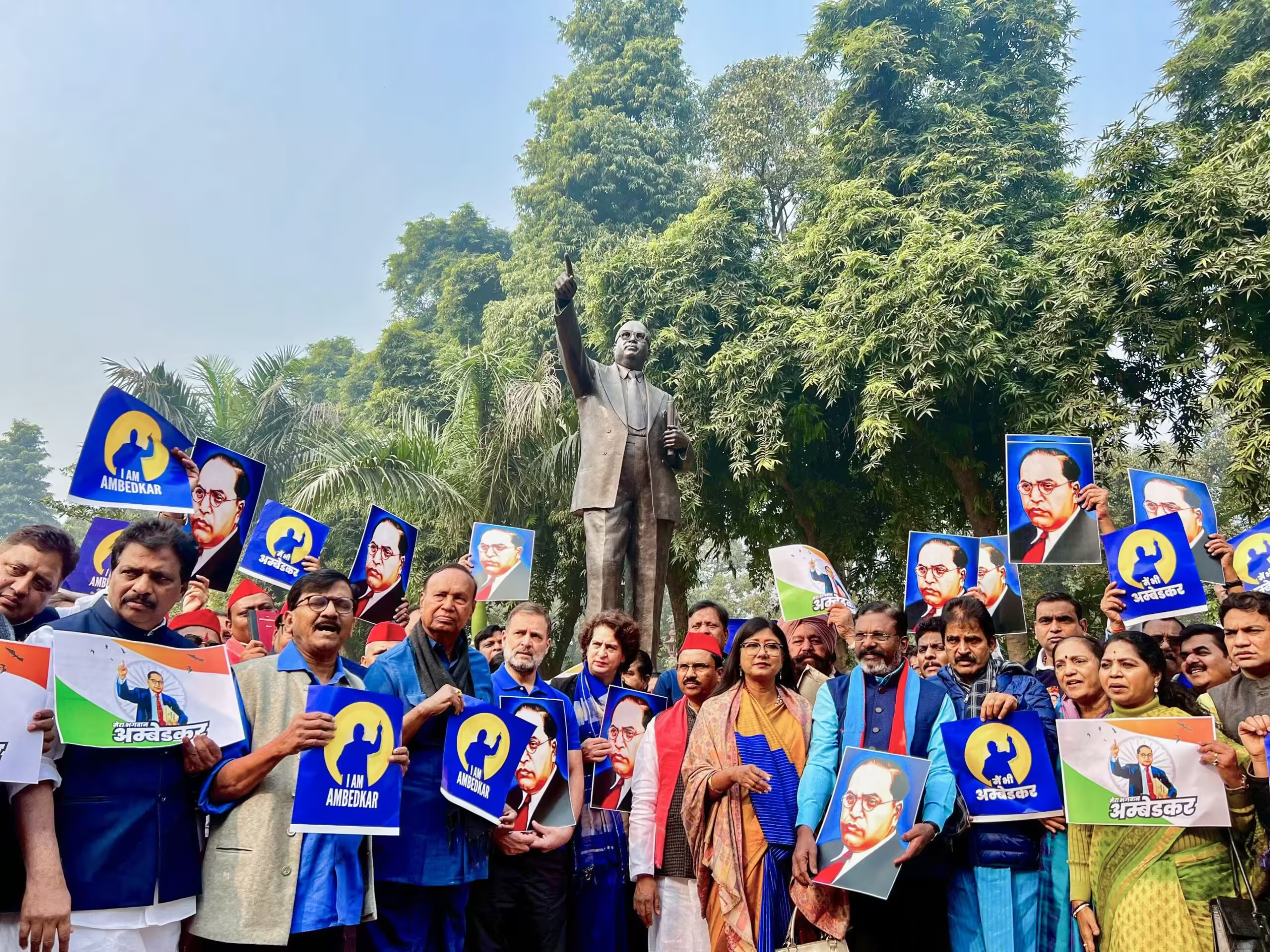
At the center of the discord were two key issues: the opposition’s demand for a discussion on the Adani controversy—a matter of public interest due to its economic implications—and calls for Union Home Minister Amit Shah to apologize for his comments about Dr. B.R. Ambedkar, a revered figure in Bharatiya history. These controversies fueled heated exchanges between the ruling BJP-led NDA and the opposition INDIA Bloc, culminating in protests, injuries, and even police intervention.
While Parliament is meant to serve as a forum for constructive debate and discussion, the escalating bitterness between parties has reduced it to a battleground for blame and disruption. The pressing need for reforms to restore discipline and decorum to this crucial institution is more urgent than ever.
The High Cost of Dysfunctional Governance
Parliament is an expensive institution to run, with each minute costing over ₹2.5 lakh. The Winter Session alone cost taxpayers ₹97.87 crore, a stark reminder of the high price of unproductive governance. Frequent adjournments, protests, and shortened sessions have led to the loss of nearly half of parliamentary time, leaving critical issues unaddressed and legislation rushed through without proper debate.
Despite these inefficiencies, the Lok Sabha managed to introduce five bills and pass four of them, while the Rajya Sabha approved three. The bills included the Mussalman Wakf (Repeal) Bill, the Disaster Management (Amendment) Bill, and the Banking Laws (Amendment) Bill, among others. However, the lack of thorough deliberation on these legislations raises questions about the quality and efficacy of laws being passed amidst the chaos.
The cost of parliamentary democracy in Bharat has increased over 100 times in the last five decades, yet its returns in terms of effective governance and accountability remain underwhelming. This growing gap between expenditure and productivity underscores the need for comprehensive parliamentary reforms to ensure that public funds are utilized responsibly.
Eroding Accountability and the Role of Parliament
Parliament plays a critical role in holding the government accountable through debates, Question Hour, and parliamentary committees. These mechanisms are essential for ensuring transparency and highlighting deficiencies in governance. However, the increasing disruptions and loss of parliamentary time have significantly weakened these processes.
Question Hour, a vital tool for eliciting information from the government, has become a casualty of frequent adjournments and partisan conflicts. With reduced opportunities for meaningful debate, the legislature is failing in its duty to act as a check on the executive. This erosion of accountability threatens the very foundation of Bharat’s democratic system, which relies on a balance of power between the legislature, executive, and judiciary.
The executive, which depends on the legislature’s support and oversight, has found itself less scrutinized due to the inefficiencies of Parliament. Without robust debate and discussion, critical issues affecting the nation’s economy, social fabric, and governance are being sidelined, leaving the public disillusioned with the political process.
The Ambedkar Controversy: A Symbol of Political Polarization
The Winter Session’s most contentious issue was the controversy surrounding Amit Shah’s comments about Dr. B.R. Ambedkar. Opposition MPs demanded an apology from the Home Minister, while BJP MPs accused the Congress of “insulting” Ambedkar. These accusations and counter-accusations led to protests both inside and outside Parliament, diverting attention from pressing legislative matters.
Dr. Ambedkar’s legacy as the architect of Bharat’s Constitution should be a unifying force in Bharatiya politics. However, the political squabbles over his name reveal the deep divisions and lack of focus among the nation’s leaders. Instead of honouring Ambedkar’s vision for a disciplined and accountable legislature, political parties have reduced his legacy to a tool for partisan gain.
The Need for Parliamentary Reform
The persistent dysfunction of Parliament highlights the urgent need for structural and procedural reforms. Professionalizing floor management techniques, strengthening the role of the business advisory committee, and ensuring strict enforcement of parliamentary rules could help restore order and productivity.
Bharat must also consider evolving its parliamentary practices to meet the demands of modern governance. This includes fostering a culture of collaboration and mutual respect among political parties, improving the quality of debates, and prioritizing public interest over partisan agendas. A return to discipline, decorum,
Balancing Accountability and Governance
While protests and disagreements are an integral part of democracy, they must not come at the cost of governance and accountability. Parliament is a communication link between the people and the government, and its inefficiency weakens the public’s voice in policymaking. Political parties must recognize their shared responsibility to make Parliament function effectively, even amid ideological differences.
The opposition’s grievances about the lack of discussions on critical issues, such as the Adani controversy, are valid. However, these concerns must be addressed within the framework of parliamentary debate rather than through disruption. Similarly, the ruling party must be more receptive to constructive criticism and provide adequate opportunities for the opposition to voice its concerns.
Conclusion: A Time for Reflection and Action
The Winter Session of Parliament serves as a stark reminder of the challenges facing Bharat’s democracy. The high cost of running Parliament, coupled with its low productivity, underscores the urgent need for reform. Discipline, collaboration, and a focus on public welfare must replace the current culture of disruption and blame.
Parliament’s role as a forum for debate, discussion, and accountability is critical for ensuring transparency and good governance. Restoring its effectiveness requires not just procedural changes but a shift in mindset among political leaders. The time for action is now, as further delays will only deepen public disillusionment and weaken Bharat’s democratic institutions.
Bharat’s Parliament has a proud history of robust debate and impactful legislation. To honour this legacy and meet the challenges of the present, political parties must rise above their differences and work together to ensure that Parliament remains a pillar of democracy and governance. Only then can it truly serve as the voice of the people and a driver of the nation’s progress.
The post Parliament in Paralysis: 2024 Winter Session Sees New Low in Productivity Amid Dysfunction appeared first on Global Governance News- Asia's First Bilingual News portal for Global News and Updates.