

Paromita Das
GG News Bureau
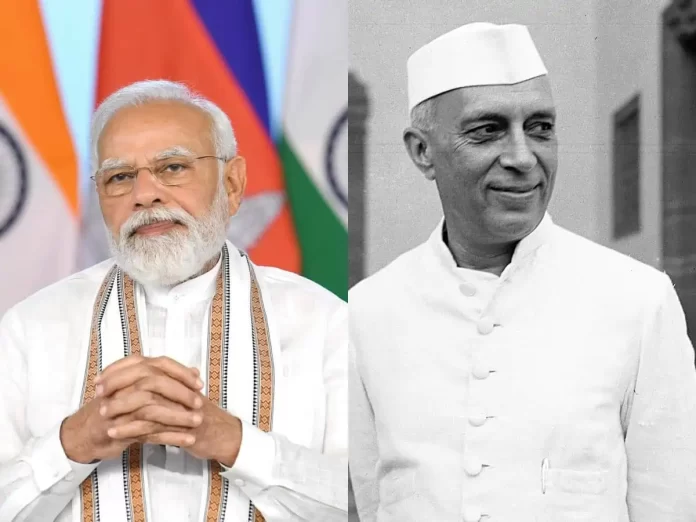
New Delhi, 6th Jan. In the midst of escalating tensions over China’s new administrative divisions in Aksai Chin, the Congress party has unleashed a barrage of criticism against Prime Minister Narendra Modi. However, a closer look at history reveals the irony of this blame game: much of the territorial loss that Congress now decries occurred during the tenure of its own leader, Jawaharlal Nehru. The recent announcement of “He’an County” and “Hekang County” by China is merely the latest chapter in a story that began with diplomatic failures and strategic miscalculations under Nehru’s leadership.
This political blame-shifting raises important questions about accountability, historical legacy, and the politicization of national security issues. While it is easy for the Congress to point fingers at the present government, its criticism risks exposing the cracks in its own historical record.
Understanding China’s Move: The Aksai Chin Context
China’s creation of He’an County and Hekang County in the disputed Aksai Chin region has once again drawn global attention to the unresolved territorial disputes between Bharat and China. The announcement underscores China’s intent to consolidate its hold over the region, which has been under its control since the 1960s.
He’an County, in particular, holds strategic importance for China due to the G219 Highway, a key supply route connecting Xinjiang and Tibet. This highway was constructed by China between 1956 and 1957, and its existence was formally acknowledged in the Bharatiya Parliament by then-Prime Minister Nehru in 1959. Despite clear evidence of Chinese advances in the region, Nehru’s government failed to take decisive action to reclaim the territory, allowing China to solidify its position.
Nehru’s Himalayan Blunders: A History of Strategic Failures
The Congress’s current critique of PM Modi ignores the inconvenient truth of its own legacy. Key areas of Aksai Chin, now part of He’an County, were occupied during Nehru’s tenure as Prime Minister. This includes strategic locations like:
- Haji Langar, seized by China in 1959, following an incident in 1958 where an Bharatiya patrol was detained.
- Qizil Jilga, captured during the 1962 Sino-Indian War.
- Chung Tash, another casualty of the 1962 conflict.
- Dehra Compas, taken over in 1961, marking yet another failure to secure Bharatiya territory.
- Shamal Lungpa, occupied in 1959, where a Bharatiya patrol was attacked by Chinese forces.
These losses were not isolated incidents but part of a broader pattern of Nehru’s diplomatic and strategic missteps. Despite early warnings about Chinese intentions, Nehru’s “Hindi-Chini Bhai Bhai” policy prioritized diplomatic appeasement over military preparedness, leaving Bharat vulnerable to Chinese aggression.
The Politicization of National Security
The Congress party’s attempt to pin the blame for China’s actions on PM Modi reflects a worrying trend in Bharatiya politics: the politicization of national security. By ignoring the historical context of Aksai Chin’s annexation and focusing solely on current developments, Congress undermines the unity required to address such challenges.
The Modi government, for its part, has taken a firm stance on China’s provocations. From the 2020 Galwan clash to the current diplomatic protests against China’s administrative changes, the government has demonstrated a commitment to safeguarding Bharat’s territorial integrity. The construction of border infrastructure, bolstered troop deployment, and increased surveillance in the region are steps that reflect a proactive approach—far removed from the inaction that characterized Nehru’s tenure.
A Lesson in Accountability
The Congress’s criticism of PM Modi over Aksai Chin exposes its selective memory and political opportunism. While it is fair to scrutinize the actions of the present government, doing so without acknowledging the historical context erodes credibility. The party’s failure to accept responsibility for Nehru’s missteps suggests a lack of introspection and an unwillingness to engage in constructive dialogue on national security.
For voters, this episode serves as a reminder of the importance of historical awareness in political discourse. Bharat’s territorial disputes with China are not the result of recent developments but decades of strategic miscalculations. Addressing them requires unity, vision, and a commitment to learning from the past—qualities that must transcend party politics.
Conclusion: Moving Beyond Blame
The Chinese government’s establishment of He’an County and Hekang County is a provocative move that underscores the ongoing challenges Bharat faces in securing its borders. However, the Congress’s attempt to blame PM Modi for these developments rings hollow in light of Nehru’s legacy of inaction in Aksai Chin.
Bharat’s political leadership, irrespective of party lines, must prioritize national security over partisan attacks. As the Modi government continues to navigate these challenges, it is incumbent upon all political actors to support policies that strengthen Bharat’s territorial integrity and bolster its strategic position.
Ultimately, safeguarding Bharat’s sovereignty demands accountability not only for present actions but also for historical decisions. Only by acknowledging the full scope of its past can Bharat chart a course for a more secure and united future.
The post Congress’s Political Amnesia: Blaming PM Modi for Nehru’s Himalayan Missteps appeared first on Global Governance News- Asia's First Bilingual News portal for Global News and Updates.