

Paromita Das
GG News Bureau
New Delhi, 7th Jan. Kashmir, often referred to as “heaven on earth,” carries within its breathtaking landscapes a history marred by violence, religious persecution, and cultural erasure. At the heart of this narrative lies the story of Srinagar’s Kali Mandir—a Hindu temple destroyed, desecrated, and transformed into the Islamic Khanqah-Maula under the guidance of Saiyid Ali Hamadani, the so-called “Baap of Kashmiri Sufism.” Hamadani’s arrival in Kashmir in 1379 CE, along with 600 disciples fleeing Timur’s invasions, marked the beginning of an era of systemic Islamization that profoundly altered the region’s cultural and religious fabric.
The transformation of Kali Mandir into Khanqah-Maula is emblematic of the oppressive policies enforced by Hamadani and later rulers like Sikandar Butshikan. These policies laid the groundwork for Kashmir’s brutal Islamization, turning the valley from a land steeped in Hindu and Buddhist traditions to a region marked by religious intolerance, forced conversions, and the systematic erasure of its ancient heritage.
The Fall of Kali Mandir: The First Target of Islamization
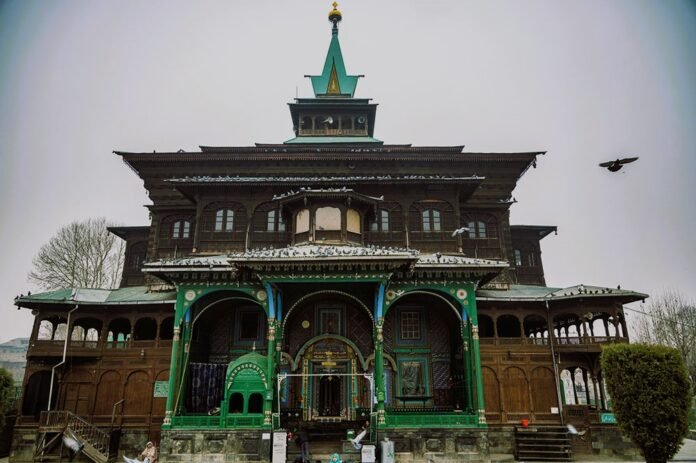
The destruction of Srinagar’s Kali Mandir stands as a grim reminder of Hamadani’s ruthless agenda. This temple, a sacred site dedicated to the goddess Kali, was not only a spiritual center for Hindus but also a symbol of their identity and resilience. Hamadani’s actions were swift and deliberate—he desecrated the temple, seized its land, and repurposed it as his residence. Over time, the temple’s remnants were used to construct the Khanqah-Maula, which was transformed into a hub for Islamic activities.
This act was far from an isolated incident. It marked the beginning of a systematic campaign to erase Hindu cultural and religious landmarks in Kashmir. The land belonging to Kali Mandir became one of the earliest examples of stolen temple property being converted into Islamic Waqf property—a pattern that would be repeated across the valley in the centuries to come.
Hamadani’s Brutal Edicts: Institutionalizing Hindu Persecution
Hamadani’s influence on Kashmiri rulers, particularly Qutb-ud-din and later Sikandar Butshikan, was profound. His text, Zakhirat-Al-Muluk, served as a manual for governing non-Muslims, enforcing barbaric policies that dehumanized Hindus and sought to obliterate their cultural and spiritual identity. These edicts included:
- A total ban on the construction or repair of Hindu temples.
- Permission for Muslims to use Hindu temples as temporary lodging, with priests obligated to host them and even allow the cooking of beef within temple premises.
- The prohibition of Hindus from carrying weapons, wearing jewelry, or riding harnessed horses.
- Strict dress codes to distinguish Hindus from Muslims.
- Severe restrictions on Hindu mourning practices and funerals near Muslim graveyards.
- Legalized enslavement of Hindus by Muslims, while Hindus were forbidden from owning Muslim slaves.
Non-compliance with these rules was met with violent consequences, including death. These measures reduced Hindus to second-class citizens in their own homeland, systematically marginalizing and oppressing them to facilitate mass conversions to Islam.
The Reign of Sikandar Butshikan: A Legacy of Destruction
If Hamadani laid the ideological foundation for Islamization, Sikandar Butshikan turned it into a brutal reality. Known as the “idol-breaker,” Sikandar intensified the destruction of Hindu temples and institutions, following Hamadani’s playbook to the letter. The prohibition on temple repairs under Hamadani evolved into outright demolition under Sikandar. It is estimated that during his reign, thousands of temples were destroyed, leaving behind a landscape devoid of the architectural marvels that once dotted the region.
Sikandar’s rule saw the mass displacement of Hindus, many of whom fled the valley to escape forced conversions and persecution. Those who stayed behind were often enslaved, forcibly converted, or killed. The systematic annihilation of Hindu culture during this period left a scar that remains visible in Kashmir’s sociopolitical landscape to this day.
Khanqah-Maula: A Monument of Oppression
The Khanqah-Maula, built on the ruins of Kali Mandir, stands as a testament to the cultural erasure perpetrated in Kashmir. While it is hailed in some quarters as an architectural and spiritual landmark, its origins are a stark reminder of the region’s tragic history. That such a monument continues to exist, celebrated as a symbol of “Kashmiri Sufism,” is a pointed insult to Bharat’s cultural heritage and the memories of those who suffered under Hamadani’s regime.
Far from being a beacon of peace, the Khanqah-Maula represents the violent imposition of Islam on a land that once thrived as a confluence of Hinduism and Buddhism. Its existence challenges Bharat’s commitment to preserving its cultural sovereignty and raises questions about the narratives that are allowed to dominate public discourse.
Reclaiming Kashmir’s True Heritage
The story of Srinagar’s Kali Mandir and its transformation into Khanqah-Maula is not just a historical account; it is a call to action. Recognizing and addressing the injustices of Kashmir’s Islamization is essential to restoring the region’s cultural and spiritual balance. While the wounds inflicted by Hamadani and his successors cannot be undone, acknowledging the truth of their actions is the first step toward healing.
Bharat must prioritize the preservation and restoration of its ancient heritage in Kashmir. This includes documenting the destruction of Hindu temples, reclaiming desecrated sites, and educating the public about the valley’s true history. Such efforts would not only honor the memory of those who suffered but also ensure that future generations understand the resilience of Kashmir’s indigenous culture.
Conclusion: A Legacy of Pain, a Path to Restoration
The destruction of Srinagar’s Kali Mandir and the oppressive policies of Saiyid Ali Hamadani and Sikandar Butshikan symbolize the darkest chapters in Kashmir’s history. These acts of cultural and religious erasure were not mere incidents of conquest but deliberate strategies to annihilate a civilization.
As Bharat grapples with the challenges of preserving its cultural heritage, the story of Kali Mandir serves as a poignant reminder of what is at stake. Reclaiming and honoring the region’s ancient roots is not just a matter of historical justice—it is a reaffirmation of Bharat’s identity and sovereignty.
The scars of Kashmir’s Islamization will not fade easily, but through truth, restoration, and resilience, the spirit of Kashyap’s land can rise again.
The post The Dark Legacy of Kashmir’s Islamization: From Kali Mandir to Khanqah-Maula appeared first on Global Governance News- Asia's First Bilingual News portal for Global News and Updates.