

Paromita Das
GG News Bureau
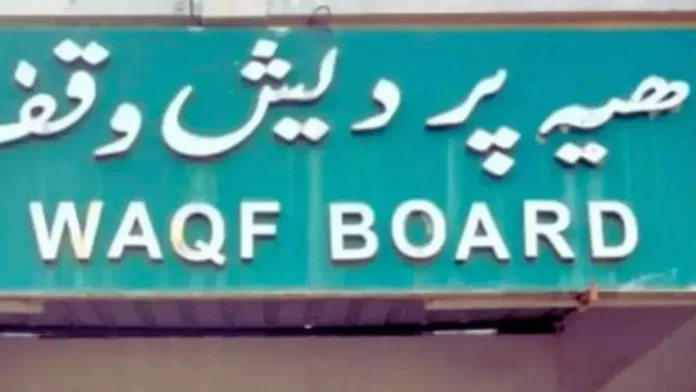
New Delhi, 24th Jan. As Bharat navigates one of its most contentious land governance debates, the ongoing deliberations over the Waqf (Amendment) Bill of 2024 have highlighted the complexities surrounding Waqf property administration. With the Joint Parliamentary Committee (JPC) holding critical meetings in Delhi and Uttar Pradesh, the issue has brought questions of ownership, transparency, and governance to the forefront of national discourse.
On January 21, during a JPC meeting in Lucknow, the Uttar Pradesh government presented striking revelations, claiming that 78% of land listed by the Waqf Board as its property actually belongs to the state. This dispute has opened a Pandora’s box of contested ownership claims, challenging historical narratives and calling for significant reforms in Waqf property management.
The issue escalates today as the JPC, chaired by BJP MP Jagdambika Pal, holds its sitting in Delhi to hear from key stakeholders, including Jammu and Kashmir’s cleric Mirwaiz Umar Farooq and representatives of ‘Lawyers for Justice.’ With its findings expected to be tabled during the upcoming Budget Session, this debate marks a pivotal moment in defining the future of land governance in Bharat.
The Uttar Pradesh Government’s Stand: Unveiling Discrepancies
At the heart of the controversy lies the UP government’s claim that out of the 14,000 hectares of land declared as Waqf property, 11,700 hectares are recorded in revenue records as government-owned, categorized under classes 5 and 6 (denoting government and Gram Sabha lands).
Additionally, the Waqf Board’s extensive claims of ownership extend to 1.3 lakh properties, including historically significant sites such as the Balrampur Government Hospital, ASI-protected monuments, and assets managed by the Lucknow Development Authority (LDA). Many of these properties were officially transferred to government departments decades ago, raising legal contradictions about their status.
Adding to the intrigue, the UP government has clarified that even iconic sites like Bada Imambara, Chhota Imambara, and the Begum ka Maqbara in Ayodhya are government-owned properties, despite the Waqf Board staking claims over them.
The Role of the Joint Parliamentary Committee
The JPC, led by Jagdambika Pal, has been working for over six months to address the broader issues surrounding Waqf property claims. The committee has held consultations across Bharat to engage stakeholders, including Shia and Sunni Waqf Boards, the Minority Commission, and state governments.
Today’s sitting in Delhi will hear suggestions from cleric Mirwaiz Umar Farooq of Jammu and Kashmir’s Muttahida Majlis-e-Ulema in the morning, followed by inputs from ‘Lawyers for Justice’ in the afternoon. Another meeting is scheduled for January 27, during which the JPC will deliberate clause by clause on the Waqf (Amendment) Bill before finalizing its report for submission during the Budget Session beginning January 31.
The JPC’s findings are expected to shed light on the systemic issues surrounding Waqf properties, paving the way for potential reforms that could modernize governance frameworks and address longstanding disputes.
Historical Context and the Need for Reform
The Waqf system in Bharat, established under Islamic law for charitable or religious purposes, has historically operated without centralized regulation. This has led to inconsistencies in property management and verification, allowing ambiguities and disputes to proliferate.
The Sachar Committee report earlier highlighted irregularities in Waqf property administration, revealing that many assets had been encroached upon or mismanaged. The revelations from Uttar Pradesh echo this broader concern, suggesting that significant portions of Waqf property claims may lack historical or legal basis.
The Waqf (Amendment) Bill of 2024 offers a critical opportunity to address these shortcomings. By introducing a standardized and transparent system for property verification and governance, the bill aims to ensure that legitimate claims are honored while curbing potential misuse or overreach.
Balancing Transparency and Historical Sensitivities
The Waqf land dispute highlights the delicate interplay between historical narratives, religious endowments, and modern governance. While the government’s focus on transparency and legal validation is commendable, it is crucial to approach this issue with sensitivity to avoid alienating communities or undermining public trust.
Ensuring a fair resolution will require a balanced framework that respects historical ownership while addressing contemporary governance needs. This includes introducing a centralized database for Waqf properties, streamlining verification processes, and engaging all stakeholders in meaningful dialogue.
At the same time, the government must ensure that legitimate Waqf properties are protected and utilized for their intended charitable and religious purposes, fostering social cohesion and inclusivity.
Conclusion: A Defining Moment for Bharat’s Governance
The ongoing deliberations over the Waqf (Amendment) Bill represent a watershed moment in Bharat’s approach to land governance. As the JPC prepares to finalize its report, the stakes are high—not only for the resolution of the current disputes but also for setting a precedent in how religious endowments are managed in the modern era.
A transparent, fair, and inclusive resolution is imperative to prevent further erosion of public trust and ensure justice for all stakeholders. The JPC’s findings, coupled with subsequent legislative actions, will test Bharat’s ability to reconcile its historical legacy with the demands of a rapidly evolving administrative landscape.
As the Budget Session approaches, the nation will watch closely to see whether these deliberations can pave the way for transformative governance, strengthening Bharat’s commitment to fairness, accountability, and inclusivity.
The post The Waqf Land Dispute: A Turning Point in Bharat’s Land Governance appeared first on Global Governance News- Asia's First Bilingual News portal for Global News and Updates.