

Paromita Das
New Delhi.
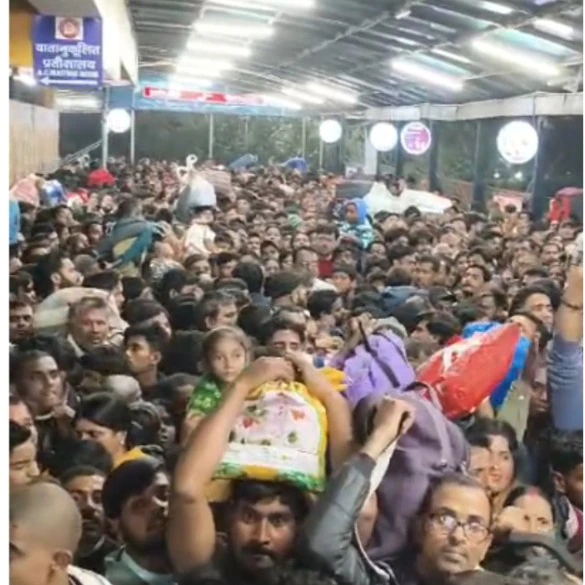
The tragic stampede at New Delhi Railway Station on February 15, 2025, which resulted in the deaths of at least 20 people, including five children, and left 15 others injured, has once again brought the country’s fragile crowd management infrastructure under scrutiny. The incident occurred due to an abrupt surge in the number of passengers waiting to board trains to Prayagraj in Uttar Pradesh, where the ongoing Maha Kumbh Mela had drawn millions of devotees. The overcrowding led to chaos on the foot-overbridges connecting platforms 14 and 15, where some passengers slipped and fell, triggering panic that quickly escalated into a deadly stampede.
Huge loss of lives in new delhi railway station
due to stampede… #NewDelhi #NewDelhiRailwaystation #delhi #maha pic.twitter.com/EOmP0JfPgf
— Geography
(@GeoStatics7372) February 15, 2025

In the wake of the disaster, there has been an outpouring of grief, harsh criticism of the authorities, and calls for urgent reforms in crowd control measures. While the railway ministry has set up a high-level committee to investigate the incident, the fundamental issues surrounding crowd safety and emergency preparedness remain unresolved. The tragedy raises a crucial question: Why do such stampedes continue to occur in Bharat, and what can be done to prevent them in the future?
A History of Stampede Disasters in Bharat
This is not the first time Bharat has witnessed a deadly stampede at a railway station or during a mass gathering. The frequency of such incidents has been increasing over the years, exposing a systemic failure in managing large crowds.
Just weeks before the New Delhi incident, a stampede at the Maha Kumbh Mela on January 29, 2025, resulted in the deaths of around 30 people, while 90 others sustained injuries. The disaster unfolded on Mauni Amavasya, a significant bathing day during the festival, when hundreds of thousands of devotees rushed towards the riverbanks. The situation turned deadly when barriers collapsed, and people in the front were trampled as a fresh wave of worshippers surged forward, unaware that many were already lying injured or unconscious on the ground.
Similarly, on January 8, 2025, a stampede at Tirupati’s famous Lord Venkateswara temple in Andhra Pradesh left six devotees dead and 40 injured. The chaos erupted as thousands gathered to collect tokens for the Vaikunta Ekadasi darshan. Despite multiple checkpoints and distribution counters, poor planning and an overwhelming number of pilgrims resulted in a tragic loss of life.
Another horrifying incident occurred on July 2, 2024, in Hathras, Uttar Pradesh, where at least 121 people died, including women and children, during a religious congregation organized by the self-proclaimed godman Bhole Baba. The event, which was permitted for 80,000 attendees, ended up drawing over 250,000 people. As devotees scrambled to exit the overcrowded venue, the sheer force of the crowd led to a catastrophic stampede. Disturbingly, the organizer fled the scene after the tragedy and has remained untraceable.
Looking back further, on January 1, 2022, a New Year’s Day celebration at the revered Mata Vaishno Devi shrine in Jammu and Kashmir turned fatal when a minor altercation between two groups escalated into a stampede, killing 12 people and injuring several others. Similar incidents have occurred at religious festivals, political rallies, and even sports events across Bharat.
Who Is to Blame?
Whenever such tragedies occur, blame is passed around between government officials, event organizers, and even the public. However, the root cause often lies in a combination of overcrowding, mismanagement, and lack of preparedness.
One of the primary factors contributing to stampedes is the failure of authorities to anticipate crowd behavior and act accordingly. At the New Delhi railway station, passengers had begun reporting dangerous levels of congestion two hours before the disaster. Yet, no significant action was taken to control the crowd or implement emergency protocols. Similarly, at the Hathras satsang, officials underestimated the turnout, leading to a catastrophic crush.
Miscommunication also plays a significant role. In the New Delhi stampede, it was reported that passengers mistook one train for another and feared missing their departure, causing them to rush towards the platform. Such confusion could have been prevented with clearer announcements and proper crowd guidance.
Moreover, Bharat’s infrastructure is not built to handle large-scale gatherings safely. Most railway stations, religious sites, and public venues lack multiple exit points, adequate signage, emergency medical facilities, and real-time crowd monitoring systems. Even when temporary arrangements are made, they often prove insufficient in managing sudden surges.
What Can Be Done to Prevent Future Stampedes?
The recurring nature of these tragedies highlights the urgent need for systematic reforms in crowd control and public safety measures. Here are some key solutions that could help prevent similar disasters in the future:
- Advanced Crowd Monitoring & Technology Implementation
Authorities must leverage modern technology to monitor crowd movements in real time. Drones, AI-powered surveillance cameras, and predictive analytics can help detect early warning signs of overcrowding and potential stampedes. Several countries have successfully used such technologies to prevent disasters at large-scale events.
- Improved Infrastructure and Emergency Exits
Public spaces, especially railway stations, religious venues, and stadiums, should be redesigned to include multiple entry and exit points, wider pathways, and better ventilation. Implementing automated gates and crowd control barriers can prevent surges and bottlenecks.
- Clear Communication & Crowd Guidance
Proper signage, digital boards, and multilingual announcements should be used to guide passengers and visitors, reducing confusion and panic. Trained personnel must be stationed at key points to assist people, manage queues, and prevent overcrowding.
- Better Coordination Between Authorities
Railway officials, law enforcement agencies, and event organizers must work together to implement standard operating procedures for crowd management. Regular drills and training sessions should be conducted to ensure that emergency response teams can act swiftly in crisis situations.
- Legal Accountability & Stricter Regulations
Holding authorities accountable for negligence is crucial. In South Korea, officials were sentenced to prison for mishandling the 2022 Halloween crowd crush in Seoul. In Bharat, however, similar actions are rare. Enforcing stricter crowd control laws and penalizing those responsible can serve as a deterrent against future lapses.
- Public Awareness & Individual Responsibility
People attending mass gatherings must also exercise personal responsibility. Following safety guidelines, avoiding unnecessary rushes, and helping others during emergencies can significantly reduce the risk of stampedes. Public awareness campaigns should be conducted to educate individuals on how to behave in large crowds and what to do in case of emergencies.
Conclusion: A Wake-Up Call for Bharat
The stampede at New Delhi Railway Station is not just another tragic event—it is a warning that must not be ignored. The repeated occurrence of such disasters highlights a deep-rooted failure in Bharat’s approach to crowd management and public safety. While the government has announced investigations and compensation for victims, real change will only come when preventive measures are prioritized over reactive responses.
Unless stronger policies, better infrastructure, and advanced technology are implemented to manage crowds effectively, these tragedies will continue to claim innocent lives. It is time for both the authorities and the public to recognize the urgency of the issue and work together to ensure that no more lives are lost due to preventable stampedes.
The post New Delhi Railway Station Stampede: A Tragic Reminder of Bharat’s Failing Crowd Management appeared first on Global Governance News- Asia's First Bilingual News portal for Global News and Updates.