

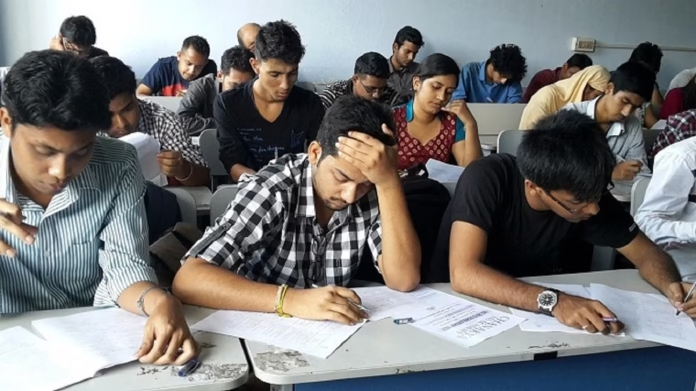
A bold and provocative comment by a leading Indian tech CEO has reignited debate over India’s obsession with the Union Public Service Commission (UPSC) Civil Services Examination. Calling it a system that “buries ambition,” the CEO said India’s brightest minds are being diverted from innovation, entrepreneurship, and creativity into a rigid, ultra-competitive bureaucracy with an acceptance rate of less than 0.1%.
“In an economy allergic to failure, UPSC is where we send our smartest youth to die slowly in coaching centers and chase 1,000 jobs out of 13 lakh dreams,” the CEO remarked at a recent education conference.
A Staggering Pyramid of Attrition
The UPSC Civil Services Exam (CSE) remains one of the most prestigious—and grueling—competitive exams in the world. In 2024, more than 13.4 lakh aspirants registered for the exam. Of those, about 5.8 lakh actually appeared for the Prelims. Only 14,627 cleared that stage, with under 3,000 advancing to the interview phase. Ultimately, just around 1,000 candidates were selected for various posts in the Indian Administrative Service (IAS), Indian Police Service (IPS), Indian Foreign Service (IFS) and other allied services.
The numbers underscore an ultra-competitive, high-stress filtering process that demands years of preparation, often at the expense of alternate careers.
Critics Question the Opportunity Cost
Many within India’s startup and innovation ecosystems argue that such extreme fixation on UPSC represents a misallocation of national talent. The tech CEO, who runs a successful AI-driven platform with global clients, said:
“If we measured lost innovation, ideas, and startups killed by exam pressure, it would be India’s biggest brain drain—and it’s happening within the country.”
Others echo similar concerns. Educationists and entrepreneurs argue that millions of engineering and science graduates end up choosing bureaucratic careers not out of passion for governance, but due to social pressure, job security, and prestige.
A Deeper Cultural Challenge
Analysts believe this isn’t merely about an exam, but about how Indian society views success and failure. From parents to peer groups, UPSC is portrayed as the ultimate validation of intelligence and hard work—ignoring the fact that 99.9% of aspirants don’t make it.
In contrast, failure in startups, business, or the arts is still stigmatized in much of India. The tech CEO referred to this as an “economy allergic to failure”—where one missed Prelims result can end a student’s confidence, and yet failing fast in a startup is seen as reckless rather than part of the growth journey.
Defenders of UPSC Push Back
However, many civil servants and educators disagree with the criticism. They argue that India needs an efficient and meritorious bureaucracy, and the exam ensures that only the most capable and determined individuals make it to top administrative positions.
“The exam isn’t the problem. It’s the lack of alternate attractive paths in India that is,” said a former IAS officer. “If you had a robust innovation economy, our young wouldn’t feel their only chance at success is through UPSC.”
The debate over UPSC is not new—but in 2025, as India pushes toward a $5 trillion economy and talks about startups, AI, and global competitiveness, the question returns stronger:
Are we investing enough in diverse career pathways for our youth—or are we sacrificing national potential at the altar of a bureaucratic dream?