

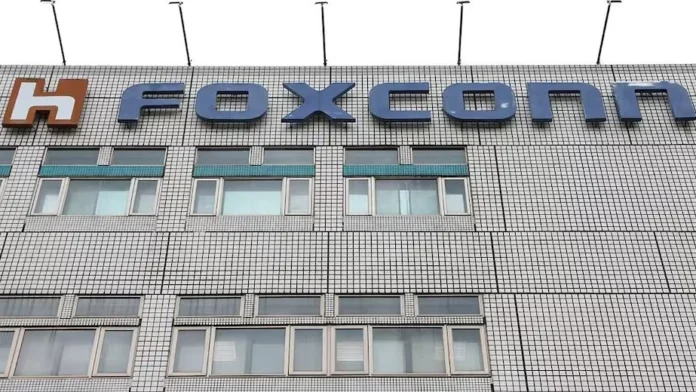
Amid reports of hundreds of Chinese engineers and technicians being recalled from Foxconn’s Indian plants, financial analyst and investor Devina Mehra has raised alarm over what she calls a larger strategic shift by Beijing to apply economic pressure on India. Mehra’s comments come in the wake of Foxconn’s downsizing and talent withdrawal, which some now view as more than just a corporate restructuring.
According to multiple reports, more than 300 Chinese engineers and technical specialists have been pulled out of Foxconn facilities in India over the past two months. The move, which has affected operations in Tamil Nadu and Karnataka, is being viewed with suspicion by strategic observers, especially given the growing friction in India-China relations.
Devina Mehra’s Warning: “Not Just Business Decisions”
Speaking at a global economic forum this week, Mehra, founder of First Global, said:
“We need to read this beyond corporate lens — China is turning the screws on India through strategic corporate decisions. The Foxconn shift is just one example. More pressure points could emerge in sectors like electronics, rare earths, and raw materials.”
She further suggested that Beijing’s recalibration of industrial partnerships is part of a broader attempt to curb India’s manufacturing rise, especially in critical areas where China has traditionally dominated, such as semiconductors, EV components, and tech hardware.
Foxconn’s India Struggles: A Geopolitical Undertone?
Taiwanese tech giant Foxconn, a key Apple supplier, has been heavily investing in India as part of its “China Plus One” strategy. However, the withdrawal of Chinese personnel — especially those critical to machinery calibration and design workflows — has slowed production ramp-ups in some units.
Industry insiders say that while Foxconn remains committed to India, it is facing operational challenges due to supply chain gaps and technical dependencies, many of which still rely on Chinese talent and components. This has given China potential leverage, which may be strategically exercised.
Indian Response: Tread Cautiously, Build Self-Reliance
Government officials have not made any formal statement on the recall of Chinese engineers, but sources suggest the Centre is watching the developments closely.
A senior industry expert remarked:
“This is a reminder that India’s electronics and semiconductor aspirations must include a plan for reducing strategic dependence on any single country — especially China. We need deeper supply chain resilience.”
As India promotes its Production-Linked Incentive (PLI) schemes and “Make in India” initiatives, the pressure is mounting to build domestic design, assembly, and skilled manpower capabilities to hedge against such strategic pullbacks.
Strategic Implications
Mehra’s observations add to a growing chorus of warnings from economists and geopolitical analysts who believe economic decisions by state-backed Chinese firms are increasingly tied to Beijing’s foreign policy agenda. The recent cooling in India-China diplomatic talks and unresolved border tensions only strengthen this narrative.
The situation also serves as a warning for Indian policymakers and investors relying on FDI from countries with complex strategic relations.
The sudden departure of over 300 Chinese technical staff from Foxconn’s Indian operations — and Devina Mehra’s stark warning — have sparked renewed debate on the geopolitics of global manufacturing. As India races to become a global electronics hub, this incident is a cautionary signal about the subtle ways in which economic pressure can be exerted in today’s interconnected world. For India, the message is clear: strategic autonomy in manufacturing is no longer optional — it is essential.