

The UAE honoured its most employee-centric companies at the Employee Happiness Awards 2025, celebrating outstanding achievements in creating positive, inclusive, and high-performance workplaces. Organised to recognise organisations that prioritise employee well-being, engagement, and cultural transformation, the awards highlight how businesses are redefining success through people-first strategies.
Held in Dubai, the event brought together senior HR leaders, CEOs, and policy makers from across industries to celebrate organisations that have consistently invested in employee satisfaction, mental wellness, diversity, work-life balance, and overall workplace happiness.
Key Highlights of the Awards
-
Top Honourees included organisations from sectors such as banking, healthcare, technology, retail, and logistics, reflecting a broad commitment to workplace well-being across industries.
-
Categories ranged from Best Employer for Work-Life Balance, Best Workplace for Women, and Excellence in Leadership Development to Innovation in Employee Engagement.
-
The awards were evaluated through a robust methodology that included employee feedback, leadership assessments, and organisational culture audits.
People-First Approach Gaining Ground in UAE
The UAE government has been a strong advocate of workplace happiness and employee engagement, aligning with the broader national vision for well-being and productivity. In line with this, the Employee Happiness Awards complement initiatives like:
-
National Programme for Happiness and Wellbeing
-
Future of Work Strategy
-
UAE Vision 2031, which includes human development as a central pillar
These awards further reinforce the belief that employee satisfaction leads to better business performance, higher retention, and stronger employer branding.
Recognition of Inclusive and Innovative Practices
Several award-winning organisations were recognised for their unique and inclusive practices:
-
Flexible working arrangements and remote work policies
-
Mental health support systems, including in-house counselling
-
Women’s leadership programmes and gender parity goals
-
Employee recognition systems, digital learning platforms, and wellness initiatives
The awards also applauded efforts to create multi-cultural, respectful, and psychologically safe environments, especially in diverse workforces like that of the UAE.
Impact and Outlook
As the region competes globally to attract and retain top talent, the Employee Happiness Awards serve as a benchmark for excellence in HR practices. They encourage more companies to invest in their most valuable asset: their people.
With work cultures evolving in the post-pandemic world, UAE’s top employers are demonstrating how purpose-driven leadership, compassion, and innovation can redefine employee experience and organisational success.
The success of the 2025 edition sets the stage for deeper conversations around employee-first policies, emotional intelligence in leadership, and building resilient, future-ready workplaces across the region.
You said:
ChatGPT said:
Title:
How Gir Lions Use Scent to Communicate in the Wild
Keywords:
Gir lions, Asiatic lions, scent communication, territorial marking, lion behavior, wildlife communication, Gir Forest, animal scent marking, lion conservation, lion biology
Introduction: The Secret Language of Scent
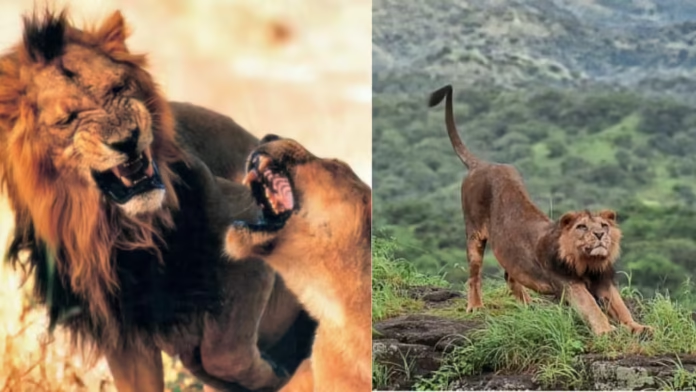
Deep within the Gir Forest of Gujarat, the last natural home of the Asiatic lion, a silent form of communication is constantly at work — scent. While roars and visual signals are well known, scent marking plays a crucial role in how these majestic animals interact, establish dominance, and ensure survival in the wild.
Scientists and forest officials studying Gir lions (Panthera leo persica) have observed that these big cats use scent to convey territorial boundaries, reproductive status, social rank, and even avoid unnecessary confrontations. It’s a complex olfactory system that keeps their world in balance.
Why Do Lions Use Scent?
Like many other big cats, Gir lions rely on scent for several reasons:
-
Territorial Marking:
Male lions rub their heads, faces, and bodies against trees, bushes, and rocks to leave their scent. This communicates ownership of a particular area and warns rival males to stay away. -
Mating Cues:
Female lions emit pheromones in their urine or through glandular secretions to indicate when they are in estrus (ready to mate). This draws males and helps synchronize breeding behavior. -
Identity and Familiarity:
Pride members use scent to recognize each other. Cubs and mothers often scent-mark each other to strengthen social bonds and identity within the pride. -
Avoiding Conflict:
When lions sense a strong male’s scent in a region, it may discourage intrusions, thereby reducing violent encounters between rival groups.
How Do They Do It?
Gir lions have scent glands located on various parts of their bodies — including the cheeks, chin, and paws. Their primary methods include:
-
Urine Spraying: On trees, shrubs, or rocks to establish territory
-
Rubbing and Headbutting: Against surfaces to deposit glandular secretions
-
Scraping Ground with Paws: Followed by urination to mark trails
-
Fecal Deposits: Used as passive scent markers in common areas
These markings carry complex chemical signals that can remain potent for several days, depending on environmental conditions.
What Makes Gir Lions Unique?
Unlike African lions, Gir lions live in smaller, more compact territories due to the forested and semi-arid terrain of Gujarat. This increases the importance of efficient scent marking, as lions need to constantly reassert their presence to avoid overlapping with neighboring prides.
Moreover, Gir lions are more solitary or form smaller pride sizes, which increases reliance on scent to maintain social understanding in the absence of constant visual contact.
Scientific Research and Conservation Insights
Wildlife biologists studying olfactory communication in Gir lions use camera traps and scent analysis to decode behavioral patterns. Understanding these scent-based interactions helps in:
-
Monitoring territorial dynamics and pride boundaries
-
Tracking reproductive cycles for breeding programs
-
Predicting conflict zones between lions or with humans
-
Improving conservation strategies by maintaining ecological balance in Gir Forest
Nature’s Silent Conversation
Scent marking may be invisible to the eye, but for the Gir lion, it’s a vital language — a coded message written in molecules. As researchers continue to decode this form of communication, they gain deeper insights into the social lives, territorial behavior, and ecological needs of one of India’s most iconic and endangered species.