

Paromita Das
GG News Bureau
New Delhi, 28th October. The economic trajectory of Bharatiya states from 1960 to 2023 tells a compelling story of regional divides, with certain states flourishing while others lag behind. A study, highlights that urbanization and the presence of vibrant economic hubs are the primary drivers behind the success of leading states like Maharashtra, Karnataka, Tamil Nadu, and Telangana. In contrast, regions lacking such hubs—particularly in eastern Bharat—face ongoing economic challenges. This article discusses these findings in depth, analyzing the factors behind these trends and proposing policy solutions for more balanced national growth.
The Rise of High-Performing States: The Role of Urban Hubs
From 1960 onwards, states like Maharashtra, Karnataka, and Tamil Nadu, with one or more economic centers, have shown significant GDP growth and high per capita incomes. The presence of cities such as Bengaluru, Chennai, and Hyderabad has created ecosystems that drive innovation, attract talent, and foster industries. For example, Karnataka’s contribution to Bharat’s GDP grew from 5.3% in 1990-91 to 8.2% in 2022-23, largely due to Bengaluru’s role as an IT hub and innovation center.
Economic Milestones of Leading States
- Maharashtra: Home to Bharat’s financial capital, Mumbai, Maharashtra has retained the largest share of Bharat’s GDP, standing at 13.3%. Mumbai and Pune’s combined economic output has anchored Maharashtra’s economy, making it a consistent top performer.
- Tamil Nadu: With the growth of industrial cities like Chennai and Coimbatore, Tamil Nadu increased its share from 7.1% to 8.9% between 1990 and 2023.
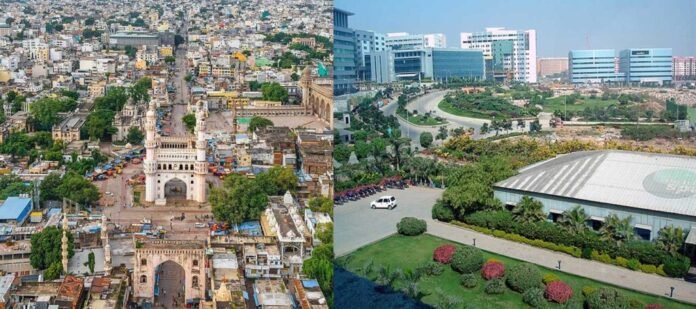
- Telangana: Hyderabad’s tech boom significantly impacted Telangana, raising its GDP share from 3.8% in 2010-11 to 4.9% by 2023-24.
- Delhi and Haryana: Despite smaller sizes, Delhi and Haryana demonstrated robust growth due to the economic influence of the National Capital Region (NCR) and Gurugram’s commercial success, each now contributing around 3.6% to the national GDP.
The Importance of Urban Hubs
Urban centers provide the infrastructure, talent, and economic diversity required for modern industries. These hubs have attracted foreign direct investment (FDI) and supported service sector expansions, particularly in technology and finance. In states without such centers, growth has often lagged, underscoring the importance of these hubs as economic growth engines.
The Struggle of Laggard States: Lack of Urbanization and Industrial Decline
While the western and southern states have leveraged their urban centers, states in eastern and northern Bharat have seen economic stagnation. West Bengal, Bihar, and Uttar Pradesh, once prominent economic players, now contribute significantly less to Bharat’s GDP. West Bengal, which commanded a 10.5% share in 1960-61, has declined to 5.6% today. Similarly, Punjab’s GDP share peaked at 4.3% in 1990-91 but fell to 2.4%.
Factors Behind the Decline
- Industrial Decay: Cities like Kolkata and Kanpur, once industrial powerhouses, have suffered from de-industrialization. Kolkata, a major center for trade and finance, lost momentum following economic policy shifts in the 1970s and failed to modernize, leading to an economic downturn.
- Neglect of Urbanization: Punjab focused on agriculture to the detriment of urban industrial development, while Bihar saw no significant emergence of urban centers. Bihar, with an urbanization rate below 20%, lacks the infrastructure and industrial base to drive high-income growth, contributing only 4.3% to the GDP (or 2.8% excluding Jharkhand).
The disparity between these states and more successful regions lies in their insufficient investment in urban centers, which has hampered opportunities for industries to expand and diversify.
The “East vs. the Rest” Divide: Understanding Regional Economic Imbalances
The real economic divide in Bharat is less about North vs. South and more about the stark disparity between the East and the rest of the country. Eastern states, especially West Bengal and Bihar, lag significantly behind due to underdeveloped urban centers, limited industrialization, and lower levels of infrastructure investment. Despite its historical role as a commercial hub, Kolkata has been unable to drive the region’s economic growth in recent years due to a lack of policy support and sustained industrial investment.
Potential Urban Growth Centers for Eastern Bharat
For Eastern Bharat to catch up, it is crucial to develop economically vibrant cities similar to those in western and southern Bharat. Promising urban centers that could drive economic resurgence include:
- Kolkata: As the largest city in Eastern Bharat, Kolkata’s established industrial base and cultural heritage make it a prime candidate for targeted economic revitalization.
- Ranchi and Jamshedpur: With strong industrial roots, these cities in Jharkhand could contribute significantly to the state’s GDP with enhanced infrastructure and investment.
- Patna: Bihar’s capital, Patna, holds potential as an economic hub if policies encourage infrastructure development and industrial diversification.
Policy Recommendations: A Targeted Urban Revitalization Strategy
To close the economic gap between Eastern Bharat and the rest of the country, policymakers should adopt a targeted approach focusing on urban infrastructure, industry diversification, and support for small and medium-sized enterprises (SMEs). Key areas of focus should include:
- Investment in Infrastructure: Improving transport, utilities, and digital infrastructure in laggard states will make these regions more attractive for businesses.
- Urban Revitalization: Developing cities like Kolkata, Patna, and Jamshedpur into active economic hubs would support job creation and attract talent and investments.
- Support for SMEs: Encouraging local businesses with subsidies and reducing bureaucratic hurdles can foster entrepreneurship, providing a foundation for sustained growth.
- Education and Skill Development: Tailoring educational programs to meet industry needs can provide the workforce required for new urban-based industries.
Conclusion: Towards a Balanced Economic Landscape
Our analysis of Bharatiya states’ economic performance reveals that urbanization and economic hubs are central to sustained growth. States like Maharashtra, Karnataka, and Tamil Nadu, with vibrant urban centers, have maintained robust growth trajectories, while states without such centers—particularly in eastern Bharat—have struggled to keep up. The current East vs. Rest divide emphasizes the need for concentrated efforts to revitalize Eastern Bharat, with Kolkata positioned as the most viable center for economic resurgence in the region.
The economic divide across Bharatiya states poses risks to inclusive growth and national development. Prioritizing urban development in eastern states like West Bengal and Bihar could produce more balanced growth, reducing reliance on a few high-performing states. With focused policy initiatives and investment, cities such as Kolkata have the potential to transform the economic narrative of Eastern Bharat. By addressing these disparities, Bharat can achieve a more equitable and sustainable economic future, bringing prosperity to all its regions.
The post Bharat’s Economic Divide: How Urban Hubs Shape State Prosperity appeared first on Global Governance News- Asia's First Bilingual News portal for Global News and Updates.