

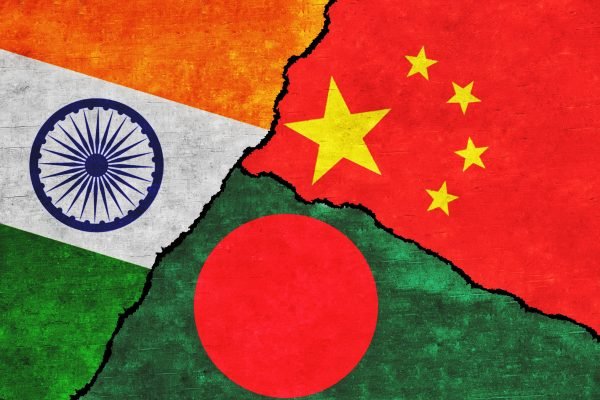
New trends in India’s northeast region have turned regional politics on its head. The ongoing developments in Mizoram and Manipur impact not only these two states but potentially also have implications for the whole of the South Asian subcontinent. The recent journeys of Mizoram and Manipur leaders, and the expanding connections with Bangladesh, Myanmar, and China, are serious security and political issues. These actions clearly show that India is seriously altering its security policies, which could be determining, not only for the northeastern states but also for the region as a whole.
The governor appointments in Mizoram and Manipur and the political events in the two states have been dominating the headlines. The appointment of the new governor of Mizoram, General V.K. Singh, a retired military general, and the high-profile presence of Amit Shah in Manipur indicate that the central government is keen to bring peace and stability to the northeastern states. The moves and words made by these governors are beginning to change the regional political dynamics.
Parliamentarians from Mizoram and Manipur, who were previously in conflict within their respective states, are now extending their reach to different groups in Bangladesh and Myanmar. The Mizoram leadership is talking to Myanmar rebels, and in Manipur, they are trying to establish links with China-linked rebel groups. These moves suggest that India is adjusting its security approaches in a more pragmatic and flexible way.
Both Bangladesh and Myanmar are important to India. Boundary conflicts with Bangladesh and the occurrence of rebel outfits in Myanmar are serious issues concerning India. Nonetheless, India has been attempting to enhance diplomatic and security relations with both nations. The continuous initiative by Mizoram and Manipur leaders to dialogue with rebel organizations in both of these nations is an indication that India is concentrated on enhancing security and diplomatic relationships with its adjoining nations.
These transformations are being fueled by the necessity of stopping rebel movements in Bangladesh, Myanmar, and China from making moves against India. India has increased its security in Mizoram and Manipur, and strategic realignments are taking place in these two states. Also, there are proposals to establish a new state within Mizoram and enlarge it by helping the Kuki tribe to increase security and peace.
India’s ambition now is to consolidate the northeastern states and link them with the rest of Indian structures so as to promote regional stability and security. The choice of General V.K. Singh as the governor of Mizoram and political change in Manipur indicate that India is moving toward a more central approach so that it can establish peace and stability in its northeastern states.
The imposition of Article 355 (President’s Rule) in Manipur indicates that India is moving to stabilize the state, and the appointment of General V.K. Singh guarantees that security in Mizoram is dealt with properly. The move to talk to the rebel factions in Mizoram and Manipur and mainstream them is also an indication of India’s new approach.
There has been increasing speculation in Indian political circles regarding the possibility of the formation of a “Greater Tripura” and “Greater Mizoram.” The proposal to form a larger region covering Tripura, Mizoram, and Manipur is also attracting attention. This would bring regional cohesion and not only make the northeastern states more powerful but also enhance India’s relations with Bangladesh and China.
Particularly in Mizoram, where the Kuki tribe is an important presence, there are plans to create a “Greater Mizoram” by increasing the size of the state. If it succeeds, this will give India new regional power and influence, making it a dominant force in South Asian political affairs.
As much as India is facing increased internal and external challenges, it is evidently true that India has been revising its security as well as diplomatic policies. The Assam Rifles and other security agencies will be the forefront in these changes. The political endeavors in Mizoram and Manipur will necessarily affect India’s military strategies too.
The appointment of General V.K. Singh and other top officials indicates that India is serious about its security in the northeastern states. The leaders’ interaction with rebel groups, who have been engaged in battles for years, indicates India’s new strategy of integrating them into mainstream politics.
One of the most debated concepts is the consolidation of various tribal factions, particularly in Mizoram and Manipur, into one unit. By consolidating various factions, India would be able to bring more cohesion to these states, which would result in improved security and political stability. The suggestion of merging the Kuki tribes with other tribal factions in Mizoram would seek to form a single political unit, which would make a big difference to the future of the state.
The increasing popularity for this notion comes from the awareness that the Mizoram, Manipur, and Tripura tribal communities are in search of belonging and security, which India is able to provide through unification.
India’s political actions are also strategically planned to keep external forces from intervening in the northeastern part of the country. The growing cooperation between India and nations such as Myanmar and Bangladesh, coupled with India’s military preparedness, is clearly communicating a message to surrounding nations such as China and Bangladesh. India is taking positive measures to secure the region and avoid destabilizing forces from gaining a foothold.
Here, the concept of establishing a new political state, possibly for the Kuki tribe or another group, may appear extreme but could be an astute step toward consolidating the region under a single umbrella. By establishing such a state, India would be making a statement of great unity and cooperation, which can promote national security and stability in the northeastern states
India is quickly changing its political and security strategies in its northeastern states toward unity and integration. The continuous political realignment in Mizoram and Manipur shows that India is making deliberate efforts to pacify its northeast and avert the entry of outside forces in the region. By solving domestic conflicts, building new coalitions, and engaging with rebel outfits, India is positioning itself more as a power in the region.
Whether these will succeed in forming a “Greater Mizoram” or “Greater Tripura” remains to be seen, but the trend of where India is going indicates a bigger vision for regional security and integration. This would have long-term implications for the future of the northeastern states and their place within the wider South Asian geopolitical scenario.
The post Changes in India-Bangladesh Relations: An In-Depth Analysis of the Conflict and Political Scenario in Mizoram and Manipur appeared first on Global Governance News- Asia's First Bilingual News portal for Global News and Updates.