

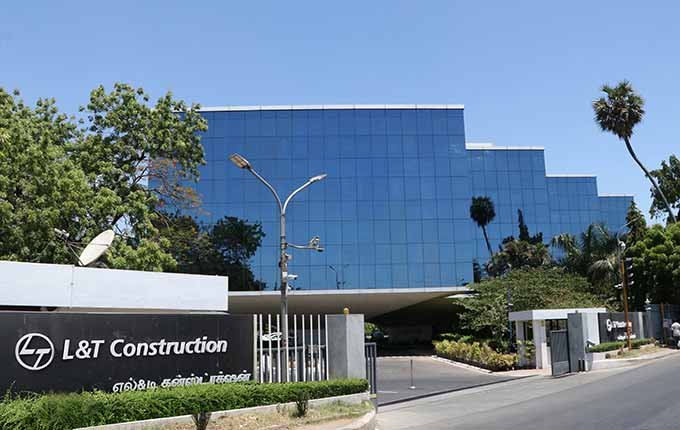
Delhi High Court issued a significant ruling directing the Department of Trade & Taxes, Government of N.C.T. of Delhi, to accept a rectification application filed by Larsen & Toubro Limited (L&T) concerning a ₹2.38 crore Goods and Services Tax (GST) demand. The demand arose due to non-reconciliation between L&T’s GSTR-01 and GSTR-09 filings for the Financial Year 2018-19. The court’s decision, highlighted by @tax_scan on X, addresses procedural fairness, ordering a fresh hearing for L&T’s rectification application, which was dismissed without proper consideration on July 30, 2024. This ruling underscores ongoing challenges in GST compliance and the importance of due process in tax disputes as of July 17, 2025.
Background: The GST Dispute
L&T, a leading engineering and construction conglomerate, faced a GST demand of ₹2.38 crore following discrepancies identified by the Department of Trade & Taxes. The issue stemmed from two primary concerns for FY 2018-19:
-
Non-Reconciliation of GSTR-01 and GSTR-09: A mismatch between L&T’s GSTR-01 (statement of outward supplies) and GSTR-09 (annual return) resulted in a demand of ₹55,38,016.
-
Input Tax Credit (ITC) Issues: L&T was alleged to have claimed ITC from dealers who were return defaulters or non-taxpayers, leading to an additional demand of ₹61,83,610.
The Department issued a show cause notice (SCN) on December 4, 2023, followed by an order on April 29, 2024, from the Sales Tax Officer Class II/AVATO, Delhi, confirming the demand. L&T challenged both the SCN and the order, arguing that the GSTR-01 data was available with the authorities, as evidenced by the attachment to the DRC-07 (demand order). Additionally, L&T filed a rectification application under Section 161 of the CGST Act, 2017, to correct the errors, but it was dismissed on July 30, 2024, without a hearing, prompting the company to approach the Delhi High Court.
L&T also challenged the validity of two Central Board of Indirect Taxes and Customs (CBIC) notifications—Notification No. 56/2023-Central Tax (December 28, 2023) and Notification No. 9/2023-Central Tax (March 31, 2023)—which were under review in a batch of petitions led by W.P.(C) 16499/2023, titled DJST Traders Pvt. Ltd..
Delhi High Court’s Ruling
The Delhi High Court, presided over by Justices Prathiba M. Singh and Rajneesh Kumar Gupta, ruled in favor of L&T, emphasizing procedural fairness. Key points of the judgment include:
-
Rectification Application Oversight: The court noted that L&T’s rectification application was dismissed without granting a proper hearing, violating principles of natural justice. The dismissal failed to address L&T’s claim that the GSTR-01 was available with the authorities, negating the basis for the non-reconciliation demand.
-
Remand for Fresh Hearing: The court directed the Adjudicating Authority to reconsider L&T’s rectification application afresh, ensuring a proper hearing to address the discrepancies between GSTR-01 and GSTR-09.
-
Judicial Precedent: The ruling aligns with prior GST rectification cases, such as Bharti Airtel Ltd. Vs. Union of India (2020), where the Delhi High Court allowed GSTR-3B rectification for FY 2017-18 due to non-operationalized forms (GSTR-2, GSTR-3) and systemic errors. Although the Supreme Court reversed this in 2021, limiting rectifications to the month errors are noticed, L&T’s case focuses on procedural lapses rather than statutory restrictions.
The court’s decision, cited as 2025 TAXSCAN (HC) 1313, was widely discussed on X, with @tax_scan noting, “Delhi HC Directs to accept Rectification Application filed by L&T Ltd.”
Broader Context: GST Compliance Challenges
The L&T case highlights systemic issues in India’s GST framework, particularly during its early years:
-
Non-Operationalized Forms: The non-operationalization of GSTR-2, GSTR-2A, and GSTR-3 in FY 2018-19, as noted in Bharti Airtel (2020), led to reliance on manually filed GSTR-3B, lacking system-based checks. This caused errors in ITC claims and reconciliations, as seen in L&T’s case.
-
Rectification Restrictions: Circular No. 26/26/2017-GST (December 29, 2017) restricts GSTR-3B corrections to the month errors are noticed, not the period they pertain to, creating compliance burdens. The Delhi High Court’s 2020 ruling in Bharti Airtel deemed this circular partially arbitrary, though the Supreme Court later upheld it.
-
Judicial Relief: High Courts, including Delhi, Gujarat, and Kerala, have consistently intervened to allow rectifications for genuine errors, as seen in cases like Deepak Print (Gujarat HC, 2021) and Koluthara Exports Ltd. (Kerala HC, 2022), emphasizing fairness over rigid timelines.
L&T’s case reflects these challenges, with the court prioritizing due process over technicalities, especially since the GSTR-01 data was available to authorities.
Implications for Businesses and Taxpayers
The ruling has significant implications:
-
Procedural Fairness: By mandating a fresh hearing, the court reinforces the right to a fair process, particularly when rectification applications address errors apparent on the record, as defined in Honda Siel Power Products Ltd. (Supreme Court, 2008).
-
GST Compliance: The decision encourages taxpayers to pursue rectification for genuine errors, especially in early GST years when systemic issues like non-operationalized forms caused discrepancies.
-
Revenue Neutrality: As noted in Deepak Print (Gujarat HC, 2021), rectifications for genuine errors are often revenue-neutral, as they correct overpaid taxes or misreported ITC without evading liability.
-
Policy Reforms: The challenge to Notifications No. 56/2023 and No. 9/2023, under review in DJST Traders Pvt. Ltd., could lead to broader reforms in GST rectification processes, potentially easing compliance burdens.
Public sentiment on X reflects cautious optimism, with users like @tax_scan highlighting the ruling as a win for taxpayers, though some expressed concerns about delays in GST portal upgrades, with one user noting, “GSTN needs to fix these systemic issues to avoid such court battles.”
Challenges and Criticisms
The L&T case underscores ongoing GST challenges:
-
Systemic Delays: The non-operationalization of GSTR-2A until September 2018, as seen in Bharti Airtel, contributed to errors in FY 2018-19, affecting firms like L&T.
-
Restrictive Circulars: Circular No. 26/26/2017-GST’s limitation on rectifications remains contentious, with courts often reading it down to ensure fairness, as in Wipro (Karnataka HC, 2025).
-
Administrative Lapses: Dismissing L&T’s rectification application without a hearing highlights gaps in administrative diligence, risking taxpayer trust.
-
Compliance Burden: Businesses face challenges reconciling GSTR-01 and GSTR-09, especially with ITC claims from non-compliant suppliers, as noted in the Calcutta High Court’s ruling on Section 16(2) of the CGST Act.
Path Forward
To address these issues, stakeholders should:
-
Enhance GST Portal Functionality: Upgrade the GSTN portal to enable real-time reconciliation of GSTR-01 and GSTR-09, reducing errors and disputes.
-
Clarify Rectification Rules: Revise Circular No. 26/26/2017-GST to allow corrections in the period errors pertain to, aligning with Section 39(9) of the CGST Act, as suggested in Bharti Airtel (2020).
-
Ensure Due Process: Train adjudicating authorities to grant hearings for rectification applications, preventing dismissals without consideration.
-
Streamline Notifications: Resolve challenges to Notifications No. 56/2023 and No. 9/2023 to provide clearer guidelines on rectification timelines and processes.
The Delhi High Court’s ruling on July 16, 2025, directing the acceptance of L&T’s rectification application for a ₹2.38 crore GST demand marks a significant step toward ensuring procedural fairness in tax disputes. By addressing non-reconciliation between GSTR-01 and GSTR-09 and the dismissal of L&T’s application without a hearing, the court reinforces the principle that genuine errors deserve redressal. As of July 17, 2025, this decision, coupled with ongoing challenges to GST notifications, highlights the need for systemic reforms to streamline compliance and reduce litigation. For businesses like L&T, the ruling offers hope for fair resolution, while urging the GST framework to evolve for greater transparency and efficiency.