

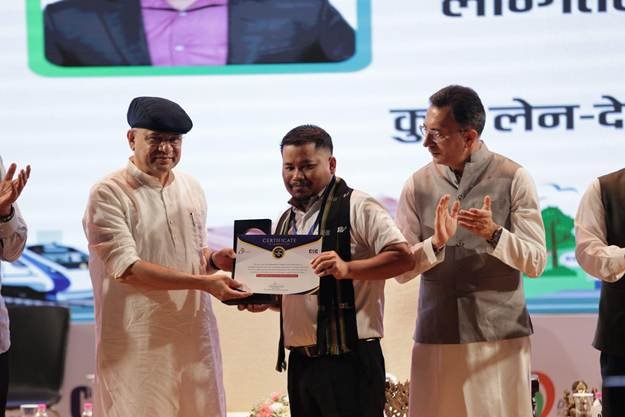
Common Service Centre e-Governance Services India Limited (CSC SPV), under the Ministry of Electronics and Information Technology (MeitY), celebrated a decade of Digital India at the Yashobhoomi Convention Centre in New Delhi. The event, marking 10 years of transformative digital empowerment, highlighted the CSC network’s growth from 83,000 centres in 2014 to 5.5 lakh in 2025, driven by Village Level Entrepreneurs (VLEs). Union Minister Ashwini Vaishnaw announced free AI training for 10 lakh citizens, prioritizing VLEs, alongside initiatives to integrate IRCTC services and state IT agencies with CSCs. As of July 17, 2025, these developments signal a new phase in India’s digital revolution, aiming to bridge the urban-rural divide and empower grassroots communities.
A Decade of Digital India: CSC’s Transformative Journey
Launched by Prime Minister Narendra Modi in 2015, the Digital India program aimed to make technology accessible to every Indian, fostering e-governance, financial inclusion, and internet accessibility. Over the past decade (2015–2025), the initiative has propelled India to become the world’s third-largest digital economy, with platforms like UPI surpassing Visa transactions globally. CSC SPV, established in 2009 under MeitY, has been pivotal, growing into one of the largest digital service delivery ecosystems with over 5.5 lakh centres, reaching nearly 90% of India’s villages.
Each CSC is managed by a Village Level Entrepreneur (VLE), a local changemaker delivering services such as Aadhaar enrollment, PAN card and passport processing, banking, insurance, telemedicine, education, skill development, legal aid via Tele-Law, and utility bill payments. The network’s expansion from 83,000 centres in 2014 to 5.5 lakh in 2025 reflects its role in bridging the digital divide, particularly in rural areas. Union Minister of State Jitin Prasada noted, “The resolve to extend the benefits of Digital India to the last mile of society is being carried forward with our VLE brothers and sisters.”
Key Announcements at CSC Diwas 2025
The 10th anniversary celebration, coinciding with CSC Diwas, was inaugurated by Union Minister Ashwini Vaishnaw, who highlighted the network’s impact. “When the world questioned how a tea seller or vegetable vendor could use digital payments, today that dream has come true—UPI payments have surpassed Visa transactions,” he said, crediting VLEs for delivering Digital India’s benefits to every citizen.
Key announcements included:
-
Free AI Training for 10 Lakh Citizens: Under the IndiaAI Mission, 10 lakh individuals, with priority for all 5.5 lakh VLEs, will receive free AI training to enhance digital services and foster innovation in sectors like agriculture, health, and education. This initiative aims to empower rural entrepreneurs with cutting-edge skills.
-
IRCTC Services Expansion: Vaishnaw urged VLEs to offer IRCTC ticketing services, leveraging recent Aadhaar-based booking mechanisms to make train tickets more accessible, even on busy routes.
-
State IT Agency Integration: The minister committed to collaborating with Chief Ministers to integrate state IT agencies with CSC-SPV, streamlining service delivery and boosting VLE incomes through state-specific services like Update Client Lite.
-
Women VLEs Empowerment: Over 74,000 women VLEs were recognized for setting benchmarks in digital inclusion, with success stories like Manjulata Chattar from Odisha and Rose Angelina M. Kharsyntiew from Meghalaya highlighted for their transformative work.
Celebrating CSC Diwas: Nationwide Impact
CSC Diwas, celebrated from July 1–16, 2025, saw nationwide participation. In Delhi, a two-day event (July 15–16) at Bharat Mandapam brought together state IT Secretaries to discuss rural empowerment and e-governance. Across the country, CSCs hosted community events, with top-performing VLEs felicitated for their contributions to digital inclusion.
Manjulata Chattar, a VLE from Mayurbhanj, Odisha, has become a lifeline for over 2,000 villagers, particularly women and marginalized communities, by providing digital services. Similarly, Rose Angelina from Meghalaya’s Mairang area, who also runs a sanitary pad manufacturing unit under the Stree Swabhiman initiative, exemplifies empowerment through CSC. These stories underscore the program’s impact on rural transformation.
Significance for India’s Digital Ecosystem
The CSC initiative and its 2025 announcements have far-reaching implications:
-
Digital Inclusion: With 5.5 lakh centres, CSCs serve as the backbone of rural digital access, offering services from Aadhaar updates to telemedicine, reducing the need for urban migration.
-
Economic Empowerment: VLEs, including over 74,000 women, generate income through service delivery, fostering entrepreneurship. The integration of Primary Agriculture Credit Societies (PACS) with CSCs enhances financial inclusion for farmers.
-
AI and Future-Readiness: Free AI training positions VLEs to leverage technologies like smart agriculture solutions and AI-powered grievance redressal, as seen in CSC’s collaboration with Salesforce.
-
Global Impact: India’s digital economy, now the world’s third-largest, showcases the CSC model as a global benchmark for public-private partnerships in e-governance.
Public sentiment on X reflects enthusiasm, with posts like @sansad_tv’s announcement of the AI training initiative garnering widespread support: “10 lakh citizens to receive free #AI training, prioritizing VLEs!”
Challenges and Opportunities
Despite its success, the CSC program faces challenges:
-
Digital Literacy: Ensuring all VLEs and citizens can effectively utilize AI training requires robust education efforts.
-
Infrastructure Gaps: Remote areas still face connectivity issues, which could hinder service expansion.
-
State Coordination: Integrating state IT agencies with CSC-SPV demands consistent policy alignment across diverse states.
Opportunities include leveraging AI to enhance service delivery, expanding IRCTC services to boost VLE incomes, and scaling women-led initiatives to further gender equity. The Salesforce collaboration for AI-powered grievance redressal exemplifies CSC’s potential to innovate.
Path Forward
To maximize the impact of these initiatives, the government and CSC SPV should:
-
Scale AI Training: Develop accessible, multilingual AI training modules tailored for rural VLEs, focusing on practical applications in agriculture and health.
-
Enhance Connectivity: Invest in rural internet infrastructure to support IRCTC and other digital services.
-
Strengthen State Partnerships: Accelerate discussions with Chief Ministers to integrate state services, ensuring VLEs can offer Update Client Lite and other local services.
-
Promote Women VLEs: Expand initiatives like Stree Swabhiman to empower more women entrepreneurs, building on success stories like Rose Angelina’s.
The celebration of 10 years of Digital India on July 16, 2025, marked a milestone in India’s digital transformation, with CSC SPV’s 5.5 lakh centres embodying the vision of inclusive growth. The announcement of free AI training for 10 lakh citizens, prioritizing VLEs, alongside IRCTC service expansion and state IT integration, signals a bold step toward a tech-driven future. As of July 17, 2025, the CSC network, powered by dedicated VLEs like Manjulata and Rose Angelina, continues to bridge the digital divide, empowering rural India and reinforcing the nation’s position as a global digital leader.