

Paromita Das
GG News Bureau
New Delhi, 5th December- Civilisations thrive not just on their material progress but on the resilience of their roots. A civilisation that forgets its foundations or fails to protect them is destined to fade into irrelevance. In Bharat, the Hindu civilisation, the oldest living cultural continuum in human history, stands as a testament to this resilience. Despite centuries of invasions and cultural upheavals, its core has endured, largely due to its relentless struggle to preserve its heritage and sacred spaces.
One of the most poignant examples of this resurgence is the reclamation of the Ram Janmabhoomi Temple in Ayodhya, which has become a symbol of cultural and civilisational renaissance. Similarly, Hindus are now turning their attention to other sacred sites, such as the Harihar Temple in Sambhal, which was repurposed during Islamic invasions as the Shahi Jama Masjid.
The Harihar Temple Controversy: A Microcosm of Civilisational Struggles
The battle over the Harihar Temple reflects the broader effort of Hindus to reclaim their sacred spaces lost to historical conquests. The temple, said to have been appropriated during the reign of Babur, has now become a focal point for those seeking justice for sites altered during centuries of foreign domination.
The narrative, however, is not without its detractors. Critics from the left and other political quarters argue that such movements could pave the way for further unrest. Prominent figures like journalist Ajit Anjum and Samajwadi Party leader Swami Prasad Maurya have claimed that such excavations might uncover evidence of Buddhist sites beneath Hindu temples, further complicating Bharat’s historical landscape.
While these arguments attempt to stoke divisions, they often fail to address the deeper truth: Hinduism and Buddhism share a symbiotic relationship, rooted in shared philosophies and cultural heritage.
Hinduism and Buddhism: A Shared Civilisational Legacy
Hinduism, the predecessor of Buddhism, forms the foundation from which Buddhism emerged. Both traditions have coexisted and influenced one another for centuries. Instances of Hindu temples being converted into Buddhist sites during Buddhism’s ascendance are well-documented. The world’s largest religious monument, Angkor Wat, serves as a prime example. Initially a Hindu temple, it was transformed into a Buddhist site under the reign of King Jayavarman VII, reflecting the fluidity of religious identities in the region.
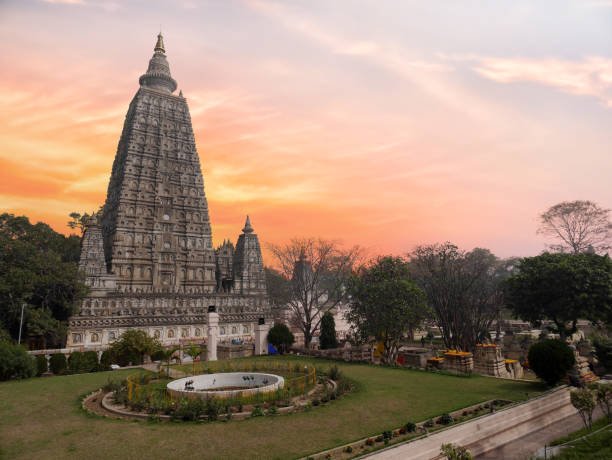
However, this transformation has rarely been a source of conflict between the two religions. Unlike the conflicts stemming from external invasions, these shifts are seen as part of an intra-civilisational evolution. This mutual respect is evident in the Mahabodhi Temple at Bodh Gaya, which has been revered by both Hindus and Buddhists over centuries.
The Role of Ambedkarite Buddhism in Modern Narratives
In contemporary Bharat, there exists a politically charged reinterpretation of Buddhism known as Ambedkarite Buddhism. Championed by B.R. Ambedkar, this perspective seeks to establish a distinct identity for Buddhism, often positioning it in opposition to Hinduism. This politicised version contrasts sharply with traditional Buddhist schools like Theravāda, which acknowledge their origins within Hindu thought.
Ambedkarite narratives have fueled divisive arguments, suggesting that Hindu claims to historical temples undermine Buddhist heritage. Yet, these views are often at odds with the lived experiences of practitioners of both religions, who share a profound sense of unity.
The Dalai Lama’s reception in Hindu spaces like Vrindavan, where his feet were ceremonially washed by Vaishnavas, exemplifies this harmony. Such gestures reflect the shared reverence between the two traditions, undermining attempts to portray them as adversaries.
Islamic Invasions and the Reclamation of Hindu Temples
Unlike the intra-civilisational dynamic between Hinduism and Buddhism, the appropriation of Hindu temples during Islamic invasions represents a rupture imposed by external forces. These events were not simply acts of conquest but an attempt to dismantle the cultural and spiritual foundation of Bharatiya civilisation.
The reclamation of these sites, therefore, transcends religious concerns. It is a civilisational effort to restore a cultural identity disrupted by centuries of foreign domination. This is evident in movements like the Ram Janmabhoomi restoration, which was as much about cultural revival as it was about religious sentiment.
Critics and the Question of Extremism
Opponents of these reclamation efforts often frame them as manifestations of extremism. Ajit Anjum’s remarks questioning whether Bharat will be governed by constitutional law or an “extremist agenda” reflect this line of argument. Such critiques, however, ignore the historical context and the legitimate civilisational aspirations driving these movements.
It is vital to differentiate between genuine attempts to restore cultural heritage and actions motivated by religious supremacy. In the case of Hindu-Buddhist interactions, there is no call for reclaiming converted sites precisely because these religions are seen as part of the same cultural continuum.
Conclusion: A Civilisational Perspective Beyond Religious Differences
The ongoing efforts to reclaim Hindu temples appropriated during Islamic invasions are not merely about religion. They represent a deeper civilisational struggle to preserve and restore a heritage that has survived millennia of challenges.
Hinduism and Buddhism, despite their historical intersections and shared spaces, do not see each other as adversaries. Their relationship is one of mutual respect and shared origins. This stands in stark contrast to the appropriation of temples during foreign invasions, which sought to disrupt the very essence of Bharatiya culture.
As Bharat navigates its historical complexities, it is imperative to approach these issues with sensitivity and a commitment to historical truth. The reclamation of temples is not about rewriting history but about acknowledging it. It is about ensuring that the roots of the oldest living civilisation continue to thrive and inspire generations to come.
The post Hindu-Buddhist Harmony: A Tale of Shared Heritage and Misguided Narratives appeared first on Global Governance News- Asia's First Bilingual News portal for Global News and Updates.