

GG News Bureau
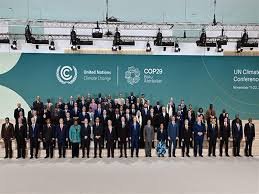
Baku, 18th Nov. India voiced its dissatisfaction with the unwillingness of developed countries to engage on critical climate issues, specifically regarding the Climate Finance and Mitigation Work Programme (MWP) during the closing plenary of the Subsidiary Bodies at the 29th Conference of the Parties (CoP29) in Baku, Azerbaijan, on November 16, 2024.
India’s delegation criticized the insistence of developed countries on expanding the scope of the MWP, calling for the inclusion of mitigation elements from the Global Stocktake at CoP28. This move, India argued, would go beyond the agreements reached in previous sessions and hamper progress on key climate action items. India aligned its position with the Like-Minded Developing Countries (LMDCs), the Arab Group, and the African Group of Negotiators (AGN), who expressed similar concerns.
In its statement, India highlighted the lack of progress on issues vital to developing countries, pointing out that nations in the Global South are facing some of the worst effects of climate change, with limited capacity to recover or adapt to these challenges. “We have seen no progress in matters that are critical for developing countries. Our part of the world is facing some of the worst impacts of climate change, with far lower capacity to recover from those impacts,” India’s statement read.
India also expressed frustration over the tendency of developed countries to disregard previous decisions made at CoP27, particularly those related to the Sharm el-Sheikh Mitigation Ambition and Implementation Work Programme. The country emphasized that the MWP was designed to facilitate focused exchanges of ideas, without imposing new targets or goals, respecting national sovereignty and circumstances.
Addressing the concerns of finance and implementation, India pointed out the critical need for means of implementation to achieve meaningful climate action. “If there are no means of implementation, there can be no climate action. How can we discuss climate action, when it is being made impossible for us to act?” the statement questioned, highlighting the increasing challenges faced by developing nations in tackling climate impacts.
India also criticized the actions of developed countries, stating that those with the highest capacity for climate action had shifted goalposts and delayed efforts, all while consuming a disproportionate share of the global carbon budget. The Indian delegation stressed that developing countries are now being asked to enhance their mitigation efforts, despite the lack of commitment and support from developed countries.
In its closing remarks, India warned against turning the bottom-up approach, which underpins the Paris Agreement, into a top-down framework that would undermine the principles of the agreement. “This attempt to make the MWP a top-down process goes against the very spirit of the Paris Agreement,” the statement concluded.
The statement from India at CoP29 underscores the growing frustration of developing countries, as they continue to push for greater accountability and action from developed nations in addressing the climate crisis.
The post India Expresses Discontent Over Developed Countries’ Approach to Climate Finance at CoP29 appeared first on Global Governance News- Asia's First Bilingual News portal for Global News and Updates.