

Paromita Das
New Delhi.
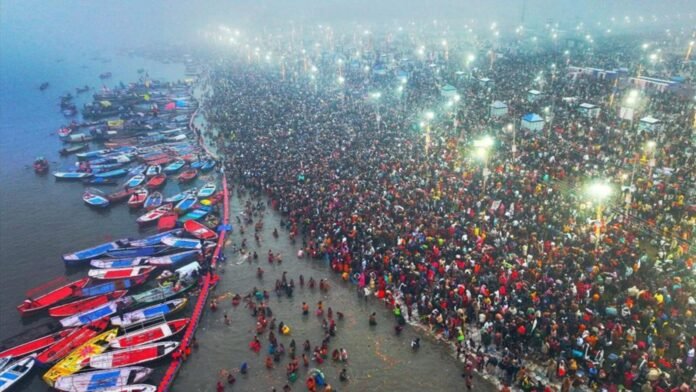
The Mahakumbh festival, one of the world’s largest religious gatherings, has not only reinforced Bharat’s deep-rooted spiritual traditions but has also emerged as a monumental economic event. Held once every 144 years, the 2025 Mahakumbh in Prayagraj has transformed the city into a dynamic hub of commerce, tourism, and infrastructure development. With an estimated business turnover of over ₹3 lakh crore (USD 360 billion), as reported by Praveen Khandelwal, Secretary General of the Confederation of All India Traders (CAIT) and Member of Parliament from Chandni Chowk, this festival has set new benchmarks in economic impact, making it a unique fusion of faith and financial prosperity.
The Economic Windfall of Mahakumbh 2025
Mahakumbh 2025 has become a catalyst for unparalleled business activity in Prayagraj and beyond. Before the festival began, experts predicted that around 40 crore (400 million) people would visit the event, generating transactions worth ₹2 lakh crore. However, the immense enthusiasm and national participation have led to revised estimates, with nearly 60 crore (600 million) devotees expected by February 26, and business volumes exceeding ₹3 lakh crore.
From local vendors to large enterprises, businesses across sectors have flourished due to the massive demand generated by the influx of pilgrims. The trade leader Khandelwal pointed out that Mahakumbh has established a robust connection between faith and the economy, demonstrating how religious events can be significant economic drivers.
Uttar Pradesh Government’s Infrastructure Investment
Recognizing the grand scale of Mahakumbh, the Uttar Pradesh government made substantial investments to upgrade the city’s infrastructure. A total of ₹7,500 crore was allocated for development, including roads, bridges, underpasses, sanitation facilities, security enhancements, and beautification projects. Of this, ₹1,500 crore was dedicated specifically to Mahakumbh arrangements, ensuring that the city could efficiently accommodate the overwhelming number of visitors.
This large-scale investment has not only improved Prayagraj’s infrastructure but has also contributed to long-term benefits for residents and businesses. The new flyovers, expanded roadways, and upgraded public amenities will continue to support economic activity long after the festival concludes.
Surging Business Across Multiple Sectors
Mahakumbh 2025 has driven economic activity across a wide range of industries, showcasing the festival’s vast commercial influence.
- Hospitality and Accommodation
With millions of pilgrims arriving in Prayagraj, hotels, guest houses, and dharamshalas (religious lodgings) have seen record bookings. Temporary tent cities and homestays have also gained immense popularity, allowing locals to generate income by providing lodging facilities.
- Food and Beverage Industry
The demand for vegetarian food and sattvik (pure) meals has skyrocketed, benefiting street vendors, restaurants, and large catering businesses. Thousands of temporary food stalls have been set up to cater to the needs of pilgrims, resulting in a significant economic boost for small-scale food entrepreneurs.
- Transport and Logistics
Mahakumbh has placed enormous demand on transportation services, from trains and buses to taxis and auto-rickshaws. The Bharatiya Railways and Uttar Pradesh State Road Transport Corporation (UPSRTC) have introduced additional services to accommodate the rush. Private cab services and e-rickshaws have also seen a surge in demand, driving profits higher.
- Religious and Handicrafts Market
The sale of religious items such as rudraksha beads, Ganga jal (holy water), puja samagri (worship materials), and traditional attire has reached unprecedented levels. Artisans and craftsmen selling handicrafts, idols, and souvenirs have experienced a sharp rise in business, showcasing the cultural richness of the region.
- Technology and Security Services
With millions of visitors, Mahakumbh has also fueled a demand for advanced security measures. High-tech surveillance, including AI-powered cameras, drones, and facial recognition systems, has been deployed. Telecom operators have upgraded networks to ensure seamless connectivity, while digital payment services have seen a spike in transactions.
The Regional Economic Ripple Effect
The economic benefits of Mahakumbh are not confined to Prayagraj alone. Cities and towns within a 150 km radius, including Varanasi, Ayodhya, and Lucknow, have witnessed a surge in tourism and business activities. Devotees visiting Mahakumbh are also making pilgrimages to these sacred destinations, further stimulating economic activity in local markets, hotels, and transport services.
Ayodhya, now home to the newly inaugurated Ram Mandir, has particularly benefited from the spillover effect of Mahakumbh. Devotees visiting Prayagraj have extended their trips to Ayodhya for darshan (worship) of Lord Ram, creating an additional economic boost for the temple town. Similarly, Varanasi, known as the spiritual capital of Bharat, has experienced heightened religious tourism, benefiting local businesses and artisans.
Branding and Merchandising Success
One of the key highlights of Mahakumbh 2025 has been the meticulous branding and merchandising efforts. The sale of Mahakumbh-themed products, including diaries, calendars, jute bags, t-shirts, and souvenirs, has witnessed significant growth. Smart marketing campaigns and digital promotions have helped businesses capitalize on the festival’s immense popularity, making it a commercial success.
The Cultural and Social Significance
Beyond its economic impact, Mahakumbh remains a testament to Bharat’s cultural heritage and spiritual unity. The festival embodies centuries-old traditions, where millions take the sacred dip in the Ganges, believing it to cleanse sins and grant moksha (liberation). The Kumbh Mela is also a meeting point for sadhus (saints), scholars, and devotees from across the world, fostering a sense of global spiritual connectivity.
Mahakumbh’s Role in Shaping Bharat’s Future Economy
Mahakumbh 2025 has set a new precedent for how religious tourism can drive economic prosperity. With Bharat increasingly recognizing the potential of faith-based tourism, there is a strong case for further investment in infrastructure and amenities to support such large-scale events.
The success of Mahakumbh also highlights the importance of preserving cultural heritage while integrating modern amenities and technology. The seamless execution of the festival, combined with its significant contribution to trade and commerce, demonstrates how faith can be a powerful economic engine.
Conclusion: A Landmark Event in Bharat’s Economic Landscape
Mahakumbh 2025 has not only reaffirmed its position as the world’s largest religious gathering but has also established itself as a mega economic event. The festival’s estimated business turnover of ₹3 lakh crore, the surge in local trade, and the infrastructural developments underscore its vast economic significance.
With millions participating and billions of rupees circulating across industries, Mahakumbh has successfully bridged spirituality with economic development. The festival serves as a shining example of how tradition and modern commerce can coexist, setting a remarkable precedent for future events in Bharat.
As Mahakumbh concludes on February 26, 2025, its legacy will continue to shape the economic and cultural fabric of the region for years to come.
The post Mahakumbh 2025: A Confluence of Faith and Economic Powerhouse appeared first on Global Governance News- Asia's First Bilingual News portal for Global News and Updates.