

Paromita Das
GG News Bureau
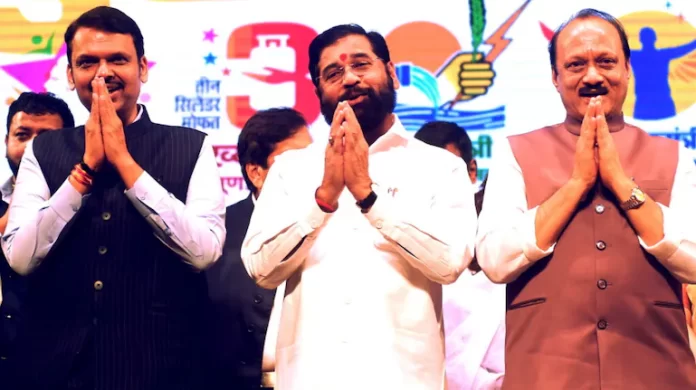
New Delhi, 25thNovember. The National Democratic Alliance (NDA), spearheaded by the Bharatiya Janata Party (BJP), achieved a landmark victory in the Maharashtra Assembly elections, securing 132 of the 149 seats it contested. This 89% success rate underscores a remarkable political comeback for the BJP, which had faced setbacks during the Lok Sabha elections earlier this year. The triumph not only solidifies the BJP’s dominance in Maharashtra but also highlights its evolving strategies and ability to adapt to regional and grassroots dynamics.
The BJP’s Journey: From Junior Partner to Dominant Force
The BJP’s transformation in Maharashtra over three decades is nothing short of extraordinary. In 1990, the party contested elections as a junior ally to Bal Thackeray’s Shiv Sena, securing a modest 42 seats. Fast forward to 2024, and the BJP has emerged as the cornerstone of the Mahayuti alliance, securing 45% of the seats needed for a majority in the 288-seat Assembly on its own.
The BJP’s dominance starkly contrasts with the decline of Uddhav Thackeray’s Shiv Sena, which managed to win just 20 seats. Once a significant player in the state, Uddhav’s Shiv Sena struggled to resonate with voters after aligning with the Congress.
Regional Dominance: A Comprehensive Victory Across Maharashtra
The BJP-led alliance demonstrated its strength across Maharashtra’s diverse regions:
- Mumbai:
Traditionally a Shiv Sena bastion, the BJP won 15 of the 36 seats in Mumbai, with allies Eknath Shinde’s Shiv Sena faction securing six and Ajit Pawar’s NCP faction winning one. - Vidarbha:
Despite challenges like drought and farmer suicides, the BJP retained its stronghold, winning 39 of the 62 seats in this region known for its RSS roots. - Konkan:
In this industrial region, the BJP and Shinde’s Shiv Sena each secured 16 seats, reflecting successful outreach to the region’s migrant workforce. - Marathwada:
Drought-hit Marathwada saw the BJP secure 19 of 46 seats, with allies Shinde and Ajit Pawar winning 12 and eight seats, respectively. - Western Maharashtra:
Traditionally dominated by Sharad Pawar’s NCP, this region saw the BJP-led alliance secure 24 of 58 seats, a significant inroad into NCP territory. - Northern Maharashtra:
The BJP’s outreach to smaller OBC communities like Teli and Kunbi helped it win 20 of 47 seats in this agricultural region.
Key Factors Behind the BJP’s Victory
- Welfare Schemes:
The “Mazi Ladki Bai” scheme launched by the Shinde government proved pivotal. By providing Rs 1,500 monthly to low-income women, the program reached 2.34 crore beneficiaries, significantly boosting the alliance’s appeal among women voters. - RSS Mobilisation:
The Rashtriya Swayamsevak Sangh (RSS) played a critical role in the BJP’s campaign, mobilizing over 60,000 workers and organizing 12,000 meetings. This ground-level outreach ensured voter turnout in crucial constituencies where victory margins were slim. - Narrative Control:
The BJP effectively framed the electoral discourse around development, inclusivity, and Hindutva themes. Slogans like “Ek hain toh safe hain” and “Modi hai toh mumkin hai” resonated with voters, while the opposition’s focus on constitutional rights and “betrayals” failed to gain traction. - Opposition Weakness:
The Maha Vikas Aghadi (MVA) alliance of Congress, Sharad Pawar’s NCP, and Uddhav Thackeray’s Shiv Sena struggled to present a cohesive narrative. Their focus on secularism and criticism of the BJP failed to connect with voters prioritizing economic and social issues. - Consolidation of Hindu Voters:
The BJP successfully consolidated non-Maratha Hindu voters, including Mali, Dhangar, and Vanjari communities, offsetting the impact of Maratha reservation protests. - Higher Voter Turnout:
Voter turnout rose from 61.1% in 2019 to 66% in 2024, a factor historically favorable to the BJP. The increased turnout reflected the party’s ability to mobilize its base effectively.
Challenges and Future Implications
While the BJP-led alliance’s victory is significant, it also raises important questions about the state’s political landscape:
Decline of Regional Parties:
The sharp decline of Uddhav Thackeray’s Shiv Sena and the weakened performance of Sharad Pawar’s NCP highlight a shift in Maharashtra’s political dynamics, with national parties gaining dominance.
Polarization Risks:
The BJP’s use of polarizing themes like “Vote Jihad” and its consolidation of Hindu voters may deepen societal divisions, posing challenges to social harmony in the long term.
Economic Expectations:
The Mahayuti alliance’s focus on development and welfare has raised expectations among voters. Delivering on promises, particularly in regions like drought-hit Marathwada, will be critical to sustaining voter trust.
The BJP’s Strategic Adaptability
The Maharashtra Assembly elections underscore the BJP’s ability to adapt its strategies to regional dynamics and grassroots realities. From leveraging welfare schemes to mobilizing diverse voter groups, the party has demonstrated an impressive understanding of the state’s political pulse.
The resurgence of the BJP in Maharashtra is not just a testament to its organizational strength but also a reflection of voters’ preference for a development-focused narrative over traditional identity politics. However, sustaining this momentum will require balancing economic development with social inclusiveness, particularly in a state as diverse as Maharashtra.
Conclusion: A Landmark Victory with Broader Implications
The BJP-led NDA’s victory in Maharashtra marks a significant political milestone, reinforcing the party’s dominance in the state and signaling its ability to recover from setbacks. By addressing grassroots concerns, introducing impactful welfare schemes, and leveraging its organizational prowess, the BJP has solidified its position as Maharashtra’s dominant political force.
However, this victory also comes with responsibilities. Meeting the expectations of voters, maintaining social harmony, and fostering economic growth will be key to sustaining this success. As Maharashtra transitions under the Mahayuti alliance’s leadership, the BJP’s performance here could serve as a blueprint for its strategies in other states and the 2024 general elections.
The post Maharashtra Assembly Elections 2024: How the BJP-Led NDA Engineered a Resounding Victory appeared first on Global Governance News- Asia's First Bilingual News portal for Global News and Updates.