

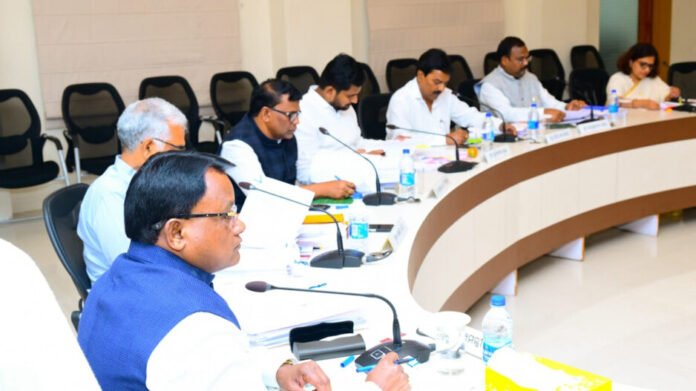
Odisha Cabinet, chaired by Chief Minister Mohan Charan Majhi, approved 13 key proposals from 11 departments, marking a significant step toward realizing the state’s Viksit Odisha 2036 vision. The flagship SAMRUDHA SAHAR scheme, with a ₹4,879.30 crore allocation, aims to transform urban areas into economic hubs, while amendments to the Odisha Semiconductor Policy enhance the state’s appeal as a high-tech investment destination. Other approvals include educational reforms, emergency service enhancements, and governance improvements, reflecting a multi-pronged approach to development. As reported on July 17, 2025, these decisions underscore Odisha’s commitment to inclusive growth, as articulated by Chief Minister Majhi and Chief Secretary Manoj Ahuja.
Key Proposals Approved
The 13 proposals span urban development, technology, education, public safety, and financial management, addressing both immediate needs and long-term goals:
-
SAMRUDHA SAHAR Yojana (₹4,879.30 crore): This flagship urban development scheme aims to transform Odisha’s cities into economic powerhouses by 2036, increasing urbanization from 17% to 40% by 2036 and 60% by 2047. With ₹765.30 crore dedicated to integrated economic clusters, industrial townships, and urban corridors, the scheme focuses on infrastructure, job creation, and private investment. It enforces statutory Master Plans and Comprehensive Development Plans (CDPs) for sustainable urban growth.
-
Odisha Semiconductor Manufacturing and Fabless Policy-2023 (Second Amendment): The Cabinet approved 16 changes to bolster Odisha’s semiconductor ecosystem, including special incentives for initial projects, enhanced Performance-Linked Incentives (PLI), relocation support, and provisions for R&D and skilling. The policy has attracted proposals from companies like RIR Power Electronics Ltd, SiCSem Pvt. Ltd., and Heterogeneous Integrated Packaging Systems Pvt. Ltd., positioning Odisha as a high-tech hub. An Apex Committee, chaired by the Chief Secretary, will oversee implementation.
-
Odisha Universities (Amendment) Ordinance, 2025: This ordinance enhances the Governor’s authority as Chancellor to appoint Vice-Chancellors for public universities under the Odisha Universities Act, 1989, aiming to streamline governance and align with national education standards.
-
Integrated Financial Management System (IFMS) 3.0 (₹290.66 crore): The Cabinet approved a bid by TCS Ltd. for upgrading IFMS 3.0, a critical IT backbone for budget formulation, payment processing, and auditing. The revised bid, 23.51% lower than the initial estimate, will enhance transparency and efficiency in financial management.
-
Dial-112 Emergency Response Support System (2025–2030, ₹2,260.89 crore): The continuation of this emergency service system, integrating police, fire, and medical response, was approved to enhance public safety through 2029–30.
-
Hostel Fee Waiver for Odisha Adarsha Vidyalayas (OAVs): The Cabinet waived ₹2,000 monthly hostel fees for over 45,000 students in 455 OAVs and non-Kasturba Gandhi Balika Vidyalaya hostels, with a ₹349.20 crore allocation over five years to promote equitable education.
-
Bifurcation of Mayurbhanj Police District: A new police district with headquarters at Rairangpur was approved to improve policing and public service delivery in Mayurbhanj, addressing the region’s law and order needs.
Additional proposals from departments like Energy, Home, Finance, and others were approved, though specific details remain undisclosed. These include governance enhancements, infrastructure projects, and social welfare measures, aligning with the state’s broader development goals.
Context and Significance
The approvals come under Chief Minister Mohan Charan Majhi’s leadership, with the Bharatiya Janata Party (BJP) emphasizing “Samrudh Odisha, Viksit Bharat” as its motto for Odisha’s centenary in 2036 and India’s independence centenary in 2047. The decisions build on prior Cabinet actions, such as the ₹6,100 crore Mukhyamantri Sahari Bikash Yojana (June 2025), the Odisha Artificial Intelligence Policy (May 2025), and the establishment of 10 new Odisha Disaster Rapid Action Force (ODRAF) units (July 2025). These initiatives reflect Odisha’s multi-sectoral strategy to enhance urban infrastructure, technology, and disaster resilience.
The SAMRUDHA SAHAR scheme aligns with the Viksit Odisha 2036 vision, aiming to create jobs and attract private investment through urban corridors and industrial townships. The semiconductor policy amendments, praised by Minister Mukesh Mahaling, position Odisha as a competitive player in India’s high-tech ecosystem, complementing national efforts like the Gujarat semiconductor plant. The educational and emergency service reforms further demonstrate a commitment to inclusive growth and public safety.
Public and Political Reactions
The approvals have garnered positive sentiment, with X posts reflecting public support. @ANI reported, “Odisha Cabinet led by CM Mohan Charan Majhi has approved 13 key proposals under 11 major departments,” while @manas_muduli highlighted key initiatives like the hostel fee waiver and Dial-112 extension. @Kalingatv and @sambad_odisha also noted the approvals, emphasizing their impact on urban and industrial growth.
However, the opposition, including the Biju Janata Dal (BJD) and Congress, has criticized the BJP government’s governance. On July 17, 2025, eight opposition parties called for a statewide bandh, citing “misgovernance” and issues like police action against BJD protesters and a student’s self-immolation at a premier educational institution. These tensions, led by figures like OPCC president Bhakta Charan Das, may challenge the government’s narrative during the implementation of these proposals.
Implications for Odisha’s Development
The Cabinet’s decisions have far-reaching implications:
-
Economic Growth: SAMRUDHA SAHAR and the semiconductor policy are expected to create jobs and attract investments, with companies like RIR Power Electronics already committing to projects. This aligns with Odisha’s maritime trade initiatives, such as the ₹18,000 crore agreements with JSW Utkal Steel and Gopalpur Ports Limited.
-
Urban Transformation: The ₹4,879.30 crore urban scheme will enhance infrastructure and mobility, positioning cities as economic hubs and supporting Odisha’s urbanization goals.
-
Educational Equity: Waiving hostel fees for 45,000 students promotes access to education, particularly for marginalized communities, aligning with national education policies.
-
Public Safety and Governance: The Dial-112 extension and Mayurbhanj police district bifurcation strengthen emergency response and law enforcement, while IFMS 3.0 enhances financial transparency.
-
Global Competitiveness: The semiconductor policy amendments position Odisha alongside states like Gujarat in India’s high-tech race, fostering innovation and skilling.
Challenges include managing opposition criticism, ensuring transparent fund utilization, and addressing infrastructure gaps in rural areas to complement urban-focused schemes. The bandh on July 17, 2025, highlights political friction that could impact public perception.
Path Forward
To maximize the impact of these proposals, the Odisha government should:
-
Ensure Transparent Implementation: Establish oversight mechanisms, like the Apex Committee for the semiconductor policy, to monitor progress and prevent mismanagement.
-
Engage Stakeholders: Address opposition concerns through dialogue to maintain public support, especially amid the July 17 bandh.
-
Balance Urban and Rural Development: Complement SAMRUDHA SAHAR with rural infrastructure projects to ensure inclusive growth.
-
Leverage Technology: Accelerate IFMS 3.0 deployment and promote digital governance tools like the Odisha Secretariat Workflow Automation System (OSWAS) to enhance efficiency.
The Odisha Cabinet’s approval of 13 key proposals on July 16, 2025, marks a transformative step toward realizing the Viksit Odisha 2036 vision. With the ₹4,879.30 crore SAMRUDHA SAHAR scheme, semiconductor policy amendments, and initiatives like hostel fee waivers and Dial-112 extension, the state is poised for urban, industrial, and social advancement. As reported on July 17, 2025, Chief Minister Mohan Charan Majhi’s leadership emphasizes transparency and economic growth, though opposition challenges highlight the need for inclusive governance. By leveraging these approvals, Odisha can solidify its role as a leader in India’s development, balancing innovation with equitable progress.