

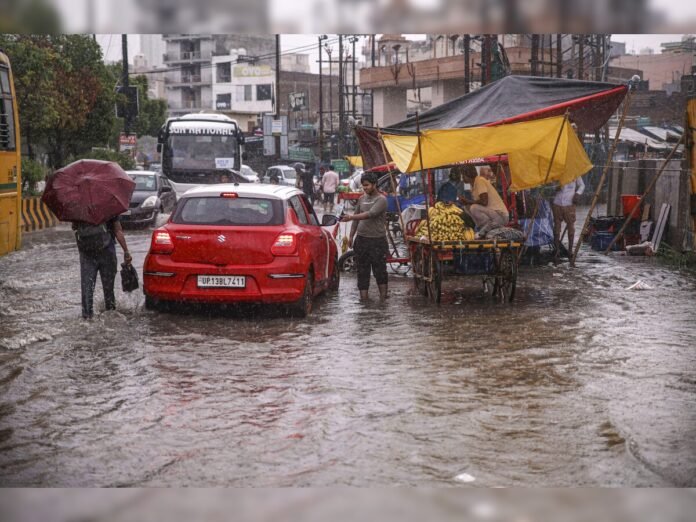
India Meteorological Department (IMD) issued a red alert for parts of Delhi-NCR, including Northeast and Southeast Delhi, Noida, Ghaziabad, and Faridabad, as heavy rainfall battered the region. The intense downpour, following overnight showers on July 22, caused severe waterlogging and traffic disruptions across key routes, bringing daily life to a near standstill. With the IMD forecasting continued rain until July 28, accompanied by thunderstorms and gusty winds of 30–40 kmph, commuters faced significant challenges navigating flooded roads. This article details the impact of the rainfall, affected areas, traffic advisories, and measures to address the crisis, while exploring the broader implications for Delhi’s infrastructure and residents.
The Red Alert and Weather Forecast
The IMD’s red alert, the highest level of weather warning, signaled extreme rainfall posing risks to life and property. Issued for Northeast and Southeast Delhi, the alert was prompted by heavy morning showers on July 23, following a brief but intense spell on July 22. Other areas, including Northwest and Southwest Delhi, Haryana, and Rajasthan, were placed under an orange alert, with light to moderate showers expected. Key forecast details include:
-
Rainfall Intensity: Moderate to heavy rain with isolated very heavy showers, accompanied by thunderstorms and lightning.
-
Wind Speeds: Gusty winds of 30–40 kmph, potentially reaching 50 kmph during intense spells.
-
Duration: Continuous rain expected until July 28, with temperatures ranging between 23°C and 36°C, below seasonal norms.
-
Rainfall Data: Pragati Maidan recorded the highest early morning rainfall at 16.6 mm, followed by Pusa (10.0 mm) and Ridge (10.4 mm). Safdarjung, Delhi’s base weather station, recorded 8.8 mm on July 22 between 8:30 AM and 5:30 PM.
The IMD attributed the weather to a monsoon trough over northern and eastern India, coupled with cyclonic circulations over Haryana and western Uttar Pradesh, driving persistent rainfall across the region.
Affected Areas and Waterlogging
Heavy rainfall led to widespread waterlogging in low-lying areas and underpasses, severely disrupting daily life. Key affected areas in Delhi and NCR included:
-
Delhi: Press Enclave Road, Anuvrat Marg (near Qutub Minar Metro Station), MB Road (Sainik Farms to Saket Metro Station), Mathura Road (near Ashram), ITO, Nehru Place, Aurobindo Marg, Kailash Colony, Lajpat Nagar, Siri Fort Road, Chirag Delhi flyover, Outer Ring Road, GK Marg, Rail Bhawan, Akshardham, Pul Prahladpur, Old Rohtak Road, Shadipur, Madhuban Chowk, NH-8, Faiz Road (near Jhandewalan), and behind the Delhi Secretariat.
-
Noida: Gaur City, Film City, and underpasses on the Delhi-Noida Expressway.
-
Gurgaon: Subhash Nagar, Old Railway Road, and Mehrauli-Gurgaon Road.
-
Ghaziabad: Areas along the Delhi-Ghaziabad corridor, including Indirapuram.
-
Faridabad: Multiple stretches reported flooding, exacerbating traffic delays.
Visuals shared on social media platforms showed vehicles wading through knee-deep water, with some, like an auto-rickshaw behind the Delhi Secretariat, breaking down. The Municipal Corporation of Delhi (MCD) reported one waterlogging complaint in Shahdara South and six incidents of fallen trees, further complicating road access.
Traffic Disruptions and Advisories
The heavy rainfall triggered severe traffic congestion, with long queues on arterial roads like NH-8, Mehrauli-Gurgaon Road, ITO, and the Delhi-Noida Expressway. Specific disruptions included:
-
South Delhi: Traffic jams on Press Enclave Road, Anuvrat Marg, and MB Road near Saket Metro Station.
-
Central Delhi: ITO and Mathura Road saw bumper-to-bumper traffic for over an hour.
-
North Delhi: Faiz Road and areas near Jhandewalan faced delays due to waterlogging.
-
NCR Corridors: Mehrauli-Badarpur and Delhi-Ghaziabad routes reported travel times exceeding an hour.
The Delhi Traffic Police issued advisories to manage the chaos, urging commuters to:
-
Avoid waterlogged routes like MB Road (Badarpur to Sangam Vihar), Outer Ring Road (Bhera Roundabout to Peeragarhi), and Ring Road under Dhaula Kuan flyover.
-
Use alternate routes, such as diverting from NS Marg to Kodia Pul and Mori Gate Boulevard Road for ISBT Kashmiri Gate commuters.
-
Rely on public transport, like the Delhi Metro, to minimize delays.
-
Stay updated via the Delhi Traffic Police’s X handle (@dtptraffic) and helplines (WhatsApp: 8750871493, Phone: 1095 / 011-25844444).
Despite heavy rainfall near Indira Gandhi International Airport, no flight disruptions were reported on July 23, unlike previous incidents where flights were diverted to Jaipur and Lucknow.
Government and Civic Response
The Delhi government and civic authorities took proactive measures to address the crisis:
-
Monitoring: Delhi Minister Atishi announced that the MCD and government agencies were closely monitoring low-lying areas and vulnerable waterlogging spots to prevent incidents like the tragic flooding in Old Rajinder Nagar, where three IAS aspirants died.
-
Infrastructure Support: The MCD and Public Works Department (PWD) deployed teams to clear drains and remove fallen trees, though locals criticized inadequate drainage systems.
-
School Closures: Following similar measures in 2024, the government considered closing schools if rainfall intensified, prioritizing student safety.
The IMD warned of potential damage to plantations, horticulture, standing crops, and vulnerable structures like kutcha houses, urging residents to stay indoors during heavy spells.
Broader Implications
The rainfall and its fallout highlight systemic challenges:
-
Economic: Waterlogging disrupts businesses, particularly in commercial hubs like ITO and Nehru Place, and affects daily wage earners reliant on mobility.
-
Social: Commuter frustration, voiced on social media, underscores public discontent with civic infrastructure. Posts on X, such as those from @ThunderWildWx, reported 60–90 mm of rainfall in eastern Delhi and Noida, amplifying calls for better drainage systems.
-
Infrastructure: Recurrent waterlogging exposes Delhi’s aging drainage network, unable to handle monsoon intensity, as seen in areas like Minto Road and Anuvrat Marg.
The rainfall, while providing relief from humidity, also poses risks of localized flooding, reduced visibility, and slippery roads, increasing accident potential and travel times.
Challenges
-
Drainage Deficiencies: Poorly maintained drains and urban encroachments exacerbate waterlogging, as seen in recurring issues at underpasses like Zakhira and Pul Prahladpur.
-
Traffic Management: Coordinating diversions during peak hours remains challenging, with slow police response times noted by commuters.
-
Public Awareness: Many residents, unaware of real-time advisories, face delays, highlighting the need for broader outreach.
-
Environmental Impact: Damage to crops and structures underscores the need for resilient urban planning.
Path Forward
To mitigate the impact of such weather events:
-
Upgrade Drainage: Invest in modern drainage systems and regular maintenance to prevent waterlogging in low-lying areas.
-
Enhance Traffic Coordination: Deploy more traffic personnel and use real-time digital signage to guide commuters during disruptions.
-
Public Communication: Leverage SMS alerts and mobile apps alongside social media to disseminate advisories widely.
-
Urban Planning: Prioritize green infrastructure, like permeable pavements, to reduce runoff and enhance flood resilience.
-
Community Preparedness: Educate residents on monsoon safety and alternative routes to minimize disruptions.
The red alert issued for Delhi-NCR on July 23, 2025, underscored the region’s vulnerability to heavy monsoon rainfall, with widespread waterlogging and traffic chaos disrupting daily life. Key areas like ITO, Mathura Road, and the Delhi-Noida Expressway bore the brunt, while the IMD’s forecast of continued rain until July 28 signals ongoing challenges. The Delhi Traffic Police and civic authorities are working to manage the crisis, but systemic issues like poor drainage and inadequate infrastructure persist. By investing in resilient urban systems and enhancing public communication, Delhi can better navigate future monsoons, balancing the relief of rain with the demands of a bustling capital.