

Paromita Das
GG News Bureau
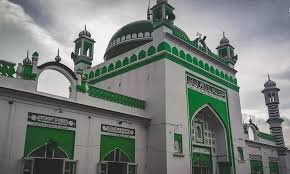
New Delhi, 27thNovember. The recent eruption of violence in Sambhal, Uttar Pradesh, has brought historical and demographic tensions to the forefront. The region, steeped in religious and cultural significance, has become a flashpoint for communal clashes over the disputed structure referred to as the Jama Masjid by some and contested as an illegally built mosque over the ancient Harihar Temple by others.
The current unrest follows the enforcement of a court order for a survey of the structure, aimed at gathering photographic and videographic evidence without physical interference. However, the response—a violent Islamist mob attack—has exposed deeper fractures within Sambhal’s socio-political fabric.
Understanding the Present Crisis: The Sambhal Context
Violence and Immediate Fallout
The survey began under lawful conditions, with prior intimation to the mosque committee. Despite this, Islamist mobs resorted to arson, stone pelting, and violence, leading to four deaths and 20 injuries. This act of aggression not only disrupted peace but also highlighted the volatility of the region’s demographic composition, where Muslims form approximately 78% of the population.
Legal Proceedings and Historical Parallels
The legal battle over the structure draws comparisons with landmark disputes like the Ayodhya Ram Janmabhoomi case and the Gyanvapi mosque survey in Varanasi. In both cases, Hindu petitioners argued that prominent temples were demolished and converted into mosques during Islamic invasions. Sambhal’s case follows a similar trajectory, with evidence pointing to the destruction of the Harihar Temple by Mughal rulers, notably Babur.
Historical Context of Sambhal
Hindu Significance of Sambhal
Sambhal holds deep spiritual significance for Hindus as the prophesied birthplace of Lord Kalki, the tenth and final avatar of Vishnu. Historical records, including those of Mughal court writer Abul Fazal, reference the presence of the Harihar Temple in Sambhal, predating the Islamic invasions.
Islamic Invasions and Cultural Erosion
Sambhal’s history is a testament to the cultural upheaval during Islamic invasions. Between the 13th and 16th centuries, successive rulers such as Ghiyasuddin Balban, Firoz Tughlaq, and Sikandar Lodi systematically targeted Hindu sites, including Sambhal. The demolition of the Harihar Temple by Babur in 1529, as detailed in the Baburnama, remains a critical piece of historical evidence in the current dispute.
Demographic Alterations
Over centuries, the demographic landscape of Sambhal has shifted significantly. Originally part of the Panchal Empire and a hub of Hindu culture, the region now has a Muslim majority. This demographic change, coupled with historical grievances, fuels contemporary tensions.
The Role of Political and Social Divisions
Infighting Among Muslim Communities
The violence has also exposed divisions within the Muslim community in Sambhal. Rivalries between Rajput Muslims and Turk Muslims, and between Sheikh and Pathan groups, add another layer of complexity. These divisions, combined with electoral dynamics—such as the BJP’s recent victory with support from Rajput Muslims—have deepened discord.
Political Involvement
The naming of Samajwadi Party leaders in the FIR, including MP Ziaur Rahman Barq, highlights the politicization of the issue. The involvement of political actors raises questions about the motives behind the unrest and the role of leadership in fostering peace.
Legal and Archaeological Considerations
Court-Ordered Survey
The civil court’s directive for a survey, led by Advocate Vishnu Shankar Jain, aims to establish facts about the disputed structure. Such surveys have previously unearthed Hindu symbols and evidence of temple architecture in similar cases, such as the Gyanvapi mosque survey.
Historical Evidence
Historical accounts and archaeological findings strongly suggest that the disputed structure was originally a temple. For instance, the Archaeological Survey of India (ASI) has documented evidence of the temple’s conversion, including modifications to the structure, such as the addition of mosque-style domes and inscriptions.
The Broader Implications of Sambhal
The Sambhal dispute is more than a localized conflict; it reflects the broader challenges of reconciling historical injustices with contemporary realities. The violent opposition to a lawful survey raises critical questions:
Why Resist the Truth?
The survey was intended to uncover facts through non-invasive means. The violent reaction suggests a fear of exposure, raising doubts about the authenticity of claims over the disputed structure.
The Role of Demographics
The unrest highlights the impact of demographic changes on communal harmony. In regions like Sambhal, where historical grievances intersect with population dynamics, the risk of conflict is magnified.
Judicial Oversight
The judiciary’s role in adjudicating such disputes is pivotal. By adhering to principles of fairness and fact-finding, courts can ensure that historical truths are acknowledged without compromising social cohesion.
Conclusion: Towards Reconciliation and Justice
The Sambhal dispute encapsulates the complex interplay of history, faith, and politics in India. While the legal process must proceed based on evidence and constitutional principles, broader societal reconciliation is essential to prevent further unrest.
The path forward lies in fostering dialogue, respecting historical truths, and ensuring that justice is served without bias. As India continues to navigate its pluralistic identity, the Sambhal case serves as a reminder of the need to balance the preservation of cultural heritage with the imperatives of modern governance.
The post Rewriting History or Preserving Truth? The Complexities of the Sambhal Dispute appeared first on Global Governance News- Asia's First Bilingual News portal for Global News and Updates.