

Paromita Das
GG News Bureau
New Delhi, 21st October. The pattern of hoax bomb threats targeting Indian airlines reached a worrying peak this week, with over 30 threats reported on October 19 alone, affecting flights operated by major carriers such as Air India, IndiGo, and Vistara. These threats have now hit a total of 70 incidents in just five days, signaling a concerning trend for national security. Meanwhile, a blast outside the CRPF school in the Prashant Vihar area of Rohini district on October 20 has intensified fears of a potential link between these threats and real acts of violence. This growing crisis demands an immediate, thorough investigation to determine if these incidents are interconnected or if they represent a larger, orchestrated plan to destabilize public security.
Hoax Bomb Threats: A Nationwide Concern
The surge in hoax bomb threats is no trivial matter. On October 19, multiple Bharatiya airlines found themselves grappling with over 30 such threats, with claims made via social media and even notes left on flights. Although all threats turned out to be fake, the damage inflicted on the country’s airline operations and public confidence is significant. Grounding planes, rerouting flights, and deploying bomb squads have cost airlines both financially and operationally. More importantly, such incidents strain the security apparatus, potentially dulling its response to real threats.
The repetitive nature of these threats poses a major risk: it could desensitize the public and weaken the response of security forces. If bomb threats continue to be perceived as hoaxes, there’s a real danger that when a genuine threat arises, the urgency in addressing it could be compromised. This is precisely why hoax threats are dangerous — not just because they cause panic and disruption, but because they create a false sense of security.
The Rohini Blast: A Warning Sign?
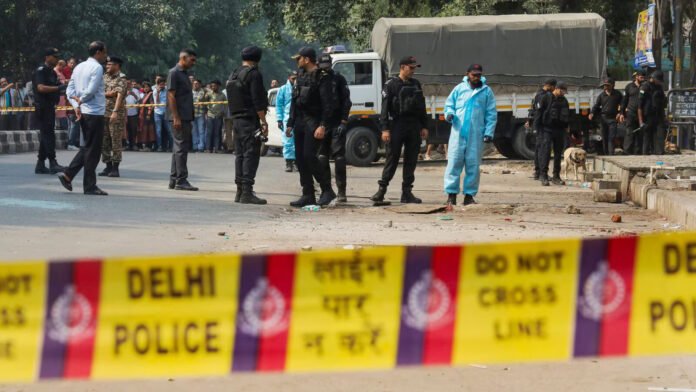
Adding to the chaos, a blast was reported on October 20 outside the CRPF school in Rohini. The explosion, although causing no injuries, damaged the school’s wall, nearby shop windows, and a parked car. Authorities dispatched the Forensic Science Laboratory and bomb disposal squad to the scene, but the nature and intent behind the blast remain unclear. This incident, coming on the heels of continuous bomb threats, raises the question of whether the hoaxes and this explosion are connected.
While police have increased vigilance and launched foot patrols, the potential for a coordinated threat cannot be ignored. If the hoax bomb threats are part of a larger strategy to test Bharat’s security response, the blast in Rohini might signal an escalation from threats to actual violence.
Is There a Broader Conspiracy?
The possibility of a coordinated plan behind these incidents is growing. In recent months, Islamist terror groups have renewed their focus on Bharat’s transportation infrastructure. Farhatullah Ghori, a Pakistan-based Islamic terrorist, released a video urging his followers to sabotage Bharatiya train lines and transportation networks in cities like Delhi and Mumbai. Ghori’s call to disrupt Bharat’s transportation system, combined with the surge in bomb threats and the Rohini blast, suggests a deliberate attempt to destabilize Bharat’s security apparatus.
Ghori’s video, released on Telegram, urged jihadists to target Bharat’s infrastructure in response to the Bharatiya government’s crackdown on Islamist funding through agencies like the Enforcement Directorate (ED) and National Investigation Agency (NIA). His inflammatory rhetoric seeks to inspire acts of terror aimed at weakening Bharat’s resilience and security.
Conclusion
The recent wave of hoax bomb threats and the blast in Rohini cannot be viewed in isolation. While hoax threats may seem like minor disruptions, their growing frequency and the accompanying physical violence demand a deeper investigation. These incidents could represent a larger, coordinated effort to probe Bharat’s security vulnerabilities and exhaust its resources.
Hoax threats alone are damaging enough, draining public resources and logistics. However, when combined with actual blasts like the one in Rohini, the risk becomes far greater. Authorities must now prioritize uncovering the link between these incidents and enhancing public safety measures. Moreover, the possibility of these incidents being part of a broader Islamist plot, as suggested by Ghori’s recent call for attacks on Bharat’s infrastructure, cannot be ignored.
Bharat’s security forces have effectively handled these incidents so far, but complacency cannot set in. If genuine threats are to be avoided, security protocols must be reinforced, public vigilance increased, and intelligence efforts amplified. Failure to act decisively could lead to devastating consequences, turning hoaxes into harbingers of real violence.
The post Rising Threats: Are Hoax Bomb Alerts and Rohini Blast Signs of a Bigger Conspiracy?” appeared first on Global Governance News- Asia's First Bilingual News portal for Global News and Updates.