

GG News Bureau
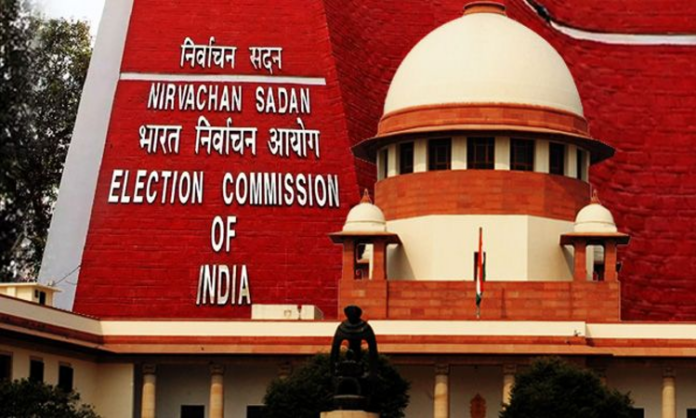
New Delhi, 9th Dec. The Supreme Court on Monday advised a petitioner seeking the inclusion of political parties under the Sexual Harassment of Women at Workplace (Prevention, Prohibition, and Redressal) Act, 2013 (PoSH Act) to approach the Election Commission of India (ECI) first. The bench, comprising Justices Surya Kant and Manmohan, emphasized that the ECI, as the authority responsible for registering and regulating political parties, is the appropriate forum to address such concerns.
The petitioner, Yogamaya MG, represented by senior counsel Shobha Gupta, had filed a public interest litigation (PIL) arguing for the application of the PoSH Act to political parties, citing their non-compliance with the Act’s provisions, particularly the lack of Internal Complaints Committees (ICCs) to address sexual harassment complaints. Prominent political parties, including the BJP, Congress, Trinamool Congress (TMC), Aam Aadmi Party (AAP), and CPI(M), were named as respondents in the petition.
Gupta informed the court that political parties lack standardized grievance mechanisms, leaving women vulnerable in political spaces. She highlighted the absence of robust ICCs as a failure to prioritize women’s safety and empowerment. The bench recorded Gupta’s statement that the petitioner would approach the ECI and explore further legal remedies if the concerns were not resolved.
The petition sought a broader interpretation of “workplace” and “employer” under the PoSH Act to include political parties, arguing that their expansive influence in society necessitates compliance with the law. The court referenced a Kerala High Court ruling that declined to extend the PoSH Act to political parties, citing the lack of an employer-employee relationship. However, the petitioner contended that the unique nature of political parties and their societal role justified their inclusion under the Act.
The PIL highlighted inconsistencies across parties in implementing mechanisms to address sexual harassment. For instance:
- The CPI(M) was noted to have ICCs with external members.
- The BJP and Congress admitted to inadequacies, with complaints often routed to disciplinary committees rather than ICCs.
- The AAP faced criticism for a lack of transparency in its grievance mechanisms.
- The Congress-affiliated All-India Professional Congress had an ICC, but its jurisdiction was limited to the specific body, not the broader party.
The petitioner argued that such inconsistencies undermine the PoSH Act’s intent, perpetuate impunity, and discourage reporting of sexual harassment cases. “Political parties, with millions of members and immense influence in public life, must be held accountable under the law to ensure women’s safety in political spaces,” the petition stated.
The Supreme Court’s directive now places the onus on the ECI to address these concerns and potentially enforce measures to bring political parties under the ambit of the PoSH Act.
The post Supreme Court Directs Petitioner to Approach Election Commission on PoSH Act Applicability to Political Parties appeared first on Global Governance News- Asia's First Bilingual News portal for Global News and Updates.