

Paromita Das
New Delhi.
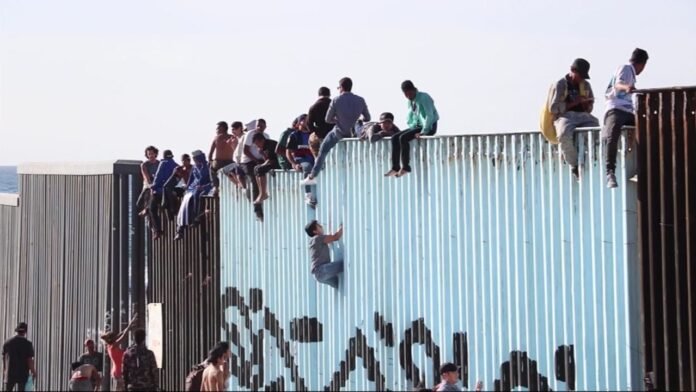
A growing crisis is unfolding as the number of undocumented Bharatiya migrants in the United States surges at an alarming rate. Once perceived as a migration pattern dominated by high-skilled professionals in IT, medicine, and engineering, Bharatiya migration to the U.S. now tells a more complex and troubling story. Many Bharatiya, particularly from Punjab and Gujarat, are now risking everything for a chance at a better future—often through illegal and dangerous means.
The recent study on undocumented Bharatiya migrants reveals an uncomfortable reality: this is not merely a case of poverty-driven migration but one fueled by unmet aspirations, exploitation by human smugglers, and loopholes in immigration laws. Unlike refugees fleeing war-torn regions, many of these migrants are not escaping persecution but rather seeking economic mobility they believe is impossible in Bharat. However, the growing crackdown on illegal immigration in the U.S., coupled with stricter deportation policies, is making their American Dream a nightmare.
The New Face of Bharatiya Migration: Why Are They Leaving?
Historically, Bharatiya migrants in the U.S. have been associated with high-skilled professions, with many entering through legal channels like H-1B visas or family-sponsored immigration. However, a sharp increase in undocumented migration in the past few years suggests a paradigm shift.
A major portion of these migrants come from Punjab and Gujarat, two of Bharat’s wealthier states. Unlike traditional migration driven by extreme poverty, this wave is fueled by economic aspirations and frustration with limited upward mobility.
Many families sell land, take loans, or liquidate assets to pay human smugglers who promise them safe passage into the U.S. via Mexico and Central America. The irony is stark—those who can afford to pay for illegal migration are often financially better off than those who cannot. But the desperation to escape limited career prospects, corruption, and lack of opportunity in Bharat pushes them toward this dangerous path.
Key drivers of this migration surge include:
- Economic stagnation in specific sectors: While Bharat’s economy is growing, wealth distribution remains uneven, leaving many without opportunities despite being financially stable.
- Influence of relatives and social networks: Many migrants are encouraged by family members already in the U.S., who portray a glamorous, exaggerated version of success, fueling unrealistic expectations.
- Human smuggling networks: Smugglers operate highly organized illegal migration routes, charging anywhere from ₹30 lakh to ₹50 lakh (USD 35,000-60,000) per person for entry into the U.S.
- Perceived lack of social mobility in Bharat: Many young Bharatiya, despite having degrees and skills, feel trapped in low-paying jobs with little room for growth.
The Rise of Asylum Fraud: Exploiting the System
One of the most troubling aspects of this migration trend is the sharp increase in asylum claims. The numbers tell a compelling story—from just 5,000 asylum applications in 2021 to over 51,000 in 2023. A majority of these claims come from Punjab, raising a critical question: What persecution are these asylum seekers fleeing?
Punjab, despite facing economic challenges, is not a war zone. Unlike countries experiencing civil wars, ethnic cleansing, or government persecution, Punjab does not meet conventional asylum criteria. Yet, human smugglers and immigration agents in Bharat and the U.S. are coaching migrants to fabricate persecution stories to exploit asylum loopholes in American immigration law.
A common strategy used by migrants includes:
- Claiming political persecution as supporters of Sikh separatist movements (such as Khalistan)
- Alleging threats from religious or political groups
- Citing false claims of discrimination or targeted violence
While some asylum claims may be genuine, a large number are fraudulent, aimed at delaying deportation proceedings and securing work permits in the U.S.. This has led to growing scrutiny from U.S. authorities, who are tightening their approach to Bharatiya asylum seekers.
The U.S. Response: Stricter Immigration Policies & Deportations
The political landscape in the U.S. is shifting, with anti-immigration rhetoric gaining momentum. Former President Donald Trump, who is seeking a return to office, has promised mass deportations as a key part of his campaign. This is not just political posturing—it is already happening.
In recent months, deportation flights carrying undocumented Bharatiya migrants have increased, particularly to Punjab, highlighting a new level of enforcement by U.S. immigration authorities. Under the Biden administration, immigration courts have also begun expediting deportation hearings for fraudulent asylum cases, making it harder for undocumented migrants to stay.
The U.S. has begun pressuring Bharat to take back its undocumented nationals, and for the first time, Bharat is acknowledging this as a domestic issue. Prime Minister Narendra Modi’s recent statement about accepting deported Bharatiya signals a shift in Bharat’s traditional stance, which previously treated illegal migration as a problem for the destination country.
Should Bharat Be Doing More to Stop Illegal Migration?
The surge in undocumented migration raises a fundamental question: Should Bharat be doing more to prevent its citizens from leaving illegally? While every individual has the right to seek a better future, doing so through dangerous crossings, asylum fraud, or human trafficking networks is unsustainable.
Bharat’s growing economy should, in theory, offer more opportunities at home, yet the persistent issue is unequal economic growth. While some industries are thriving, many others remain stagnant, leaving young Bharatiya frustrated with limited career prospects.
Bharat’s Role in Curbing Illegal Migration
Instead of focusing solely on enforcement, Bharat needs to address the root causes that push people toward illegal migration.
- Skill Development & Job Creation: The government must invest in employment programs targeting regions where illegal migration is most prevalent. If better opportunities exist at home, fewer people will risk their lives to migrate illegally.
- Stronger Border Control & Crackdown on Human Smuggling: Authorities need to shut down human trafficking networks that exploit desperate families.
- Public Awareness Campaigns: Many migrants do not realize the dangers of illegal migration. Educating people about legal migration options and the risks of being undocumented can help deter illegal attempts.
- Engaging with the Bharatiya Diaspora in the U.S.: Bharat must work with its existing NRI communities to ensure that those who migrate legally integrate smoothly and do not resort to fraudulent means.
The Deeper Socio-Economic Crisis Behind Migration
The increase in undocumented Bharatiya migrants is not just about numbers—it reveals a deeper socio-economic imbalance. Despite Bharat’s rapid growth, many still feel excluded from the country’s success story. The reality is not just about escaping poverty, but about escaping stagnation.
For many, the American Dream is no longer about ambition—it is about desperation. When individuals sell family land, borrow huge sums, and embark on dangerous journeys, it highlights a fundamental lack of faith in the system back home.
If Bharat does not address these disparities, migration—whether legal or illegal—will continue at an increasing pace. Instead of reacting to U.S. deportation policies, Bharat must take proactive steps to make staying home a more viable and attractive option.
Conclusion: A Crossroads for Migration Policy
The rising number of undocumented Bharatiya migrants in the U.S. is a symptom of a larger issue—one that requires both Bharat and the U.S. to take decisive action. While the U.S. is tightening its immigration policies, Bharat must focus on creating real opportunities for its youth to prevent desperation-driven migration.
Ultimately, the goal should be to make Bharat a land of possibilities—where people choose to stay because they see a future at home, not because they fear deportation from abroad.
The post The Rising Wave of Undocumented Bharatiya Migrants in the U.S.: A Crisis of Aspiration appeared first on Global Governance News- Asia's First Bilingual News portal for Global News and Updates.