

GG News Bureau
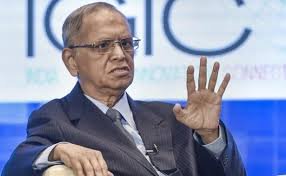
New Delhi, 23rd Dec. The debate on work-life balance has taken center stage after Infosys co-founder Narayana Murthy’s recent advocacy for a 70-hour workweek and criticism of India’s transition to a five-day workweek. Congress MPs Karti Chidambaram and Gaurav Gogoi have voiced strong opposition, emphasizing the importance of efficiency and work-life balance over longer hours.
Chidambaram, taking to X (formerly Twitter), criticized Murthy’s perspective, calling the idea of extended work hours “meaningless.” He highlighted the struggles of daily life, including inadequate infrastructure, and stressed the necessity of balancing work and personal life for a harmonious society. “Work-life balance is most important for good social order & harmony,” Chidambaram wrote.
Working longer is meaningless, focus should be on efficiency. Daily life is as it is a struggle, battling inefficient & substandard infrastructure & amenities. Work life balance is most important for good social order & harmony. We should infact move to a 4 day working week. 12… https://t.co/EOOer6AgnK
— Karti P Chidambaram (@KartiPC) December 22, 2024
Echoing similar sentiments, Congress MP Gaurav Gogoi underscored the significance of personal commitments like raising children, caring for elderly parents, and maintaining friendships. “Life is about more than just work,” Gogoi posted on X, describing work-life balance as a “modern necessity” for men and women alike.
I also disagree with the view of Shri Narayan Murthy ji on work-life balance.
After all what is life but looking after your children, cooking for them, teaching them, taking care of your elderly parents, being there for your friends in their times of need, making sure that your… https://t.co/h3B9G8Lx0f
— Gaurav Gogoi (@GauravGogoiAsm) December 4, 2024
Push for a Four-Day Workweek
Chidambaram further proposed a radical shift to a four-day workweek, suggesting that companies consider implementing a schedule from 12 noon on Monday to 2 PM on Friday. He drew parallels with Tokyo’s recent decision to adopt a four-day workweek starting next year to encourage family planning and address declining fertility rates.
Murthy’s Stand: Hard Work is Non-Negotiable
At the CNBC Global Leadership Summit, Murthy defended his position, stating that India’s challenges as a developing nation require dedication and hard work. He expressed disappointment over the shift to a five-day workweek in 1986 and cited Prime Minister Narendra Modi’s 100-hour workweek as an example of commitment.
“In India, there is no alternative to hard work. I am proud of having worked hard all my life and will take this opinion to the grave,” Murthy said, rejecting the concept of work-life balance.
A Divided Outlook on Work Culture
Murthy’s remarks have sparked a national debate on the balance between productivity and personal well-being. While his supporters argue that extended hours are crucial for national progress, critics point to the need for efficient systems and a balanced approach to sustain societal harmony.
The contrasting viewpoints highlight the evolving perspectives on work culture in India, with policymakers, industry leaders, and employees grappling with the question: How much work is too much?
The post Work-Life Debate: Narayana Murthy’s 70-Hour Workweek Idea Faces Backlash from Congress MPs appeared first on Global Governance News- Asia's First Bilingual News portal for Global News and Updates.